
The Case of the Morning Jog Companion
Okay, so here's the thing about listening to Sherlock Holmes while running through Cambridge at 6 AM: you start noticing things. The guy walking his dog at the same time every day. The woman who always parks her car slightly crooked. Conan Doyle has ruined me. I'm out here profiling strangers when I should be focusing on my heart rate.
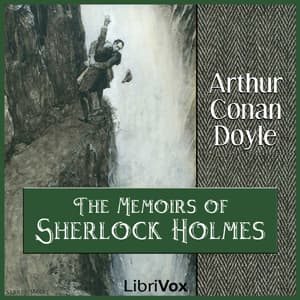
I picked up The Memoirs of Sherlock Holmes because I needed something that wouldn't require my full attention during workouts but would still keep my brain engaged enough to forget I was exercising. (My therapist would have thoughts about this avoidance strategy, but whatever works, right?) And honestly? This collection delivered. Mostly.
Why Holmes Still Works (A Behavioral Psychologist's Take)
The protagonist exhibits classic features of what we'd now recognize as high-functioning autism spectrum traits mixed with possible stimulant use - but that's not what makes him compelling. What makes Holmes work, psychologically speaking, is that Conan Doyle understood something fundamental about human nature: we're drawn to people who see what we miss.
These stories introduce Mycroft Holmes and Professor Moriarty, and I found myself asking: why does Sherlock really need a nemesis? The research actually shows that identity formation often requires an opposing force - we define ourselves partly by what we're not. Moriarty isn't just a villain. He's Holmes' dark mirror. The author understands human nature in ways that still hold up over a century later.
The mysteries themselves vary in quality. Some are genuinely clever. Others... well, let's just say the solutions rely on knowledge that no reasonable listener would have. (Victorian snake species, anyone?) But the character work remains solid throughout. Watson's loyalty, Holmes' brittleness disguised as arrogance, the parade of desperate clients - it's a fascinating case study in how detective fiction became a vehicle for exploring class anxiety and moral ambiguity.
The Narrator Roulette
Here's where it gets complicated. This particular version features various readers, and the experience is... uneven. Look, I couldn't find specific details on exactly which narrator handled which story in this edition, but based on what I heard, the quality swings pretty dramatically.
Some performances nail it. Clear pronunciation, engaging pacing, the kind of warm delivery that makes you feel like you're sitting in a Victorian parlor with a cup of tea. The character voices actually sound like different people - which shouldn't be notable, but trust me, it is.
Other sections? A little stiff. A little wooden. Holmes is supposed to be reserved, yes, but there's a difference between "brilliant detective with emotional distance" and "narrator who sounds like they're reading a grocery list." Psychologically, this doesn't track - Holmes has passion, just channeled differently. When the narration flattens that out, you lose something essential.
The good news: the production quality is clean. No weird audio glitches, no jarring transitions. At 8 hours and 36 minutes, it's a solid commitment but not overwhelming.
Who Should Listen (And Who Should Run)
Best for: Fans of classic detective fiction who want something they can zone in and out of. Commuters. People doing chores. Anyone who appreciates that mysteries used to have actual plots instead of just vibes and trauma reveals. (Yes, I'm being judgmental. I contain multitudes.)
Consider skipping if: You need consistently dynamic narration to stay engaged. If one weak voice in an ensemble cast will pull you out entirely. Or if you're the type who gets annoyed by Victorian-era assumptions about... basically everything. The casual classism and occasional xenophobia are period-accurate but, you know. Yikes.
I listened at 1.25x speed during my jogs and it felt natural - the pacing is measured enough that a slight bump doesn't make anyone sound like a chipmunk.
The Verdict
This is comfort food for the brain. Not every story is a masterclass, and not every narrator brings their A-game, but the collection as a whole? Pretty satisfying. Conan Doyle's character psychology holds up remarkably well. The man knew how to write obsession, rivalry, and the particular loneliness of being the smartest person in the room.
Would I recommend it? Sample first. Seriously. The narrator lottery means your experience might be different from mine. But if you land on a good performance, you're in for a treat.
Now if you'll excuse me, I need to go analyze why my neighbor takes out his trash at exactly 7:14 PM every night. Holmes has made me insufferable.