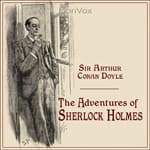

Look, I've been teaching "A Scandal in Bohemia" to sophomores for probably fifteen years now. Every year, same thing - they groan when they see the Victorian prose, then slowly get sucked in despite themselves. So when I finally decided to listen to the full Adventures of Sherlock Holmes collection while grading midterms, I figured I knew exactly what I was getting into.
I was wrong. And I mean that in the best possible way.
Why These Stories Still Work
Here's the thing about Conan Doyle that I don't think gets enough credit - the man understood pacing before pacing was a thing people talked about. Each of these twelve stories is basically a masterclass in narrative economy. No wasted scenes. No bloated subplots. Just problem, investigation, revelation, done. My students would call it "tight." (They'd also call it "lowkey fire," which I'm choosing to interpret as a compliment.)
Listening to them back-to-back like this - something I'd never actually done before, just taught individual stories - you start to notice patterns. Watson's voice as narrator is doing so much heavy lifting. He's not just our window into Holmes; he's the reader surrogate who asks the obvious questions so Holmes can explain his brilliance without seeming like he's showing off. It's a neat trick. Conan Doyle basically invented a whole genre's worth of conventions in these pages.
"The Red-Headed League" remains my favorite of the bunch. The absurdity of the premise - a man hired specifically because of his red hair - somehow makes the eventual revelation more satisfying, not less. And "The Speckled Band" is genuinely creepy, even 130 years later. I was walking the lakefront with Denise during that one and actually stopped to look around when we got to the climax. She thought I'd seen a mugger. I'd just heard a snake.
Mark F. Smith Behind the Microphone
Okay, so here's where I have to be honest - I couldn't find a ton of information about Mark F. Smith's other work. But based on this performance? The man gets Watson.
His narration sits in this comfortable middle register that feels like someone actually telling you a story rather than performing one. Not overly dramatic, not flat. Just... present. The pacing is measured in a way that lets Conan Doyle's prose breathe, which matters more than you'd think. These stories were originally published in magazines, meant to be savored, not binged. Smith seems to understand that.
The character differentiation is solid if not spectacular. Holmes comes through as slightly clipped, precise - you can hear the impatience underneath. The various clients and villains get enough distinction that you're never confused about who's speaking, even if they're not wildly different voices. Some reviewers have noted the accent feels a touch modern for the Victorian setting, and yeah, I can hear that. It didn't bother me, but if you're the type who needs period-perfect RP, fair warning.
What I really appreciated was how Smith handles Holmes's deductive explanations. Those could easily become tedious - just walls of logical reasoning - but he finds the rhythm in them. The pauses land right. The narrator understands that pause is punctuation, as I tell my students approximately eight hundred times per semester.
The Listening Experience (Or: What I Learned Grading Papers)
Eleven hours and seventeen minutes. That's a lot of Victorian detective fiction. I spread it over about two weeks - morning walks, evening grading sessions, one particularly long faculty meeting about standardized testing that I'm pretty sure no one noticed I'd checked out of. (Sorry, Principal Martinez. The budget can wait. Holmes was explaining how he knew the typewriter was a Remington.)
The episodic structure makes this basically perfect for interrupted listening. Each story is self-contained, so you can put it down after "The Engineer's Thumb" and pick back up with "The Noble Bachelor" three days later without losing anything. For those of us who listen in stolen moments between actual responsibilities, that's huge.
At 1.0x speed - and yes, I know, I'm ancient - the prose has room to land properly. Conan Doyle was a craftsman. The sentences deserve to be heard at the pace they were written. Though I'll admit, some of the longer descriptive passages in "The Copper Beeches" might benefit from a slight bump if you're impatient.
The audio quality is clean throughout. No weird artifacts, no volume inconsistencies between stories. Basic stuff, but you'd be surprised how many public domain recordings get this wrong.
Who Should Listen
If you've only seen the BBC Sherlock or the Downey films - both of which I enjoy, for the record - and never actually read the source material, this is your chance. The original Holmes is less manic, more methodical, and honestly more interesting for it. He's not a superhero. He's just very, very observant, and Conan Doyle makes you believe a person could actually be this way.
If you're a teacher looking for something to recommend to students who claim they "hate reading," audiobooks count. I said it. The prose deserves to be savored either way.
If you loved The Name of the Rose or any of the great literary mysteries, this is their spiritual ancestor. Everything those books do, Conan Doyle did first.
My students would probably hate this - too slow, too Victorian, not enough explosions. I love it. That's usually a good sign.