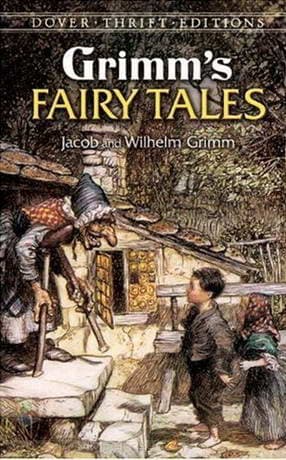

Look, I'll be honest with you. I started this audiobook thinking it'd be a nice nostalgic trip through the fairy tales I half-remembered from childhood. You know the ones - Cinderella, Snow White, the usual Disney source material. What I got instead was ten and a half hours of the actual Brothers Grimm, which is... a different animal entirely.
I was grading sophomore essays on The Great Gatsby - the ones where they all insist Gatsby is "relatable" without explaining why - when I put this on. Figured some fairy tales would be a nice palate cleanser. By hour two, I'd forgotten about Nick Carraway entirely because I was too busy processing a story where a stepmother makes her daughter cut off parts of her foot to fit into a shoe. My students would love this. I would never tell them that.
The Voice Behind the Tales
Bob Neufeld has this interesting quality where he sounds like someone's grandfather reading bedtime stories, except the bedtime stories involve significantly more dismemberment than you'd expect. His voice is warm, measured, genuinely pleasant to listen to. And here's the thing - for a collection this long and this varied, that consistency matters.
He doesn't do wildly different voices for every character. This isn't a full-cast production with sound effects and dramatic scoring. It's one guy, reading fairy tales, letting the words do the work. And for the Grimms? That actually works. These stories weren't written to be performed - they were transcribed from oral tradition, meant to be told simply. Neufeld gets that. He understands that pause is punctuation, that the horror of "Cinderella" doesn't need theatrical embellishment when the text itself is already plenty horrifying.
That said - and I couldn't find much about Neufeld's other work online - his approach does get a bit monotonous in the longer stretches. Around hour six, I started noticing that every witch sounds roughly the same, every princess has a similar cadence. It's not bad, it's just... consistent to a fault. If you're listening straight through (don't do this), you'll notice. If you're dipping in and out over a few weeks like a normal person, it's fine.
What the Brothers Grimm Are Really Saying
Okay, so here's where my English teacher brain kicks in. (My students would groan right now. They're not wrong to.)
These aren't the sanitized versions. This is the 1812 collection, or close to it, before the Grimms started softening things for bourgeois German parents who complained about the violence. And honestly? The darkness is the point. These stories are about consequences. About the cruelty of the world and the small, strange ways justice sometimes prevails.
There's a reason we still read the classics, and it's not because they're comfortable. Hearing them read aloud - especially in this straightforward, no-frills style - strips away the Disney gloss and reminds you what these tales actually are. Folk wisdom wrapped in nightmare logic. Morality plays where the morality is... questionable at best.
I found myself pausing constantly to think about what I was hearing. (This is why I listen at 1.0x. The prose deserves to be savored, even when - especially when - it's describing birds pecking out someone's eyes.)
Fair Warning
This is not a "put it on in the background" audiobook. The production is clean, the audio quality is solid, but there's nothing to grab your attention if you drift. No musical cues, no dramatic shifts in tone. If you're doing chores or commuting, you'll miss things.
Also - and this is important - ten and a half hours of fairy tales is a lot. The format gets repetitive. Third son goes on quest, meets magical helper, defeats evil, gets princess. Rinse, repeat, occasionally add cannibalism. I'd recommend treating this like a short story collection: a few tales at a time, maybe before bed, definitely not during a faculty meeting. (Principal Martinez, I was absolutely not listening to "The Juniper Tree" during your budget presentation. That story involves a child being murdered and served as stew. I would never.)
Some listeners have mentioned wishing for more sound design, more production value. I get it. But honestly? I think that would've ruined it. These are meant to feel like stories told around a fire, not Hollywood productions.
Who Should Listen
If you loved Angela Carter's fairy tale retellings, this is their source material. If you're a folklore nerd, a literature student, or someone who wants to understand why Disney changed so much - this is worth your time. If you want something to keep you entertained on a road trip, maybe look elsewhere.
This is for the listeners who want to sit with the text. Who want to hear the original words in a voice that respects them. Who don't mind that the pacing is slow because they understand that's the point.
My wife Denise fell asleep during "Rumpelstiltskin." She says it was relaxing. I choose to take that as a compliment to Neufeld's soothing delivery rather than a criticism of the material.
The Verdict
It's not perfect. The narration could use more variation, the runtime is daunting, and the lack of production extras might disappoint some listeners. But for what it's trying to be - a faithful, respectful reading of foundational Western folklore - it succeeds. The audio is clean. The narrator knows when to get out of the way. The stories themselves are as strange and brutal and weirdly compelling as they've been for two hundred years.
Worth pausing the faculty meeting for. Just maybe not all ten hours at once.