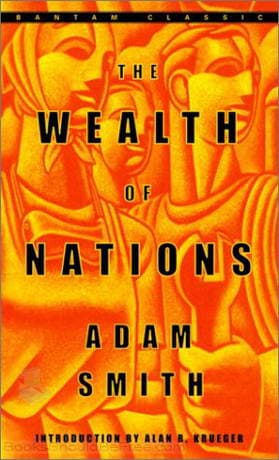

Look, I'm gonna be honest with you. I listened to Adam Smith's Wealth of Nations during a particularly brutal consulting project - 14-hour days, hotel rooms in cities I couldn't name if you paid me, and this audiobook playing while I stared at spreadsheets. It felt appropriate. The father of modern economics keeping me company while I helped a startup figure out why they were hemorrhaging cash. (Spoiler: they weren't reading Adam Smith.)
Here's the bottom line: This book is foundational. Essential. The intellectual equivalent of your grandmother's recipe that every restaurant chef has stolen from. But this particular audiobook version? It's like getting that recipe read to you by someone who's never actually cooked.
The ROI Problem
This is a 9-hour abridged version of a text that originally spans five books. Five. And they've condensed it down to Book 1. On one hand, thank god - the full unabridged version would test even my 2.0x speed tolerance. On the other hand, you're getting maybe 20% of Smith's actual argument. The famous stuff is here - the invisible hand, division of labor, the pin factory example that every Econ 101 professor still uses. But the deeper analysis? The parts where Smith actually gets interesting about mercantilism and colonial economics? Gone.
My parents ran a dry cleaning business. They didn't need Adam Smith to tell them that specialization increases productivity - my mom pressed shirts, my dad handled the books, and they both worked until their hands hurt. But Smith's genius wasn't in stating the obvious. It was in building a complete framework for understanding why markets work. This audiobook gives you the highlight reel, not the framework.
The Narrator Situation
I couldn't find much about the narrator online, and honestly, it shows. The voice is clear enough - I could understand every word, which is more than I can say for some business audiobooks I've suffered through. But there's no life in it. No inflection. Smith was writing during the Scottish Enlightenment, and his prose has this dry wit to it that completely disappears when read in monotone.
When Smith describes how a worker who makes pins all day becomes incredibly efficient at pin-making but loses the ability to do anything else - there's irony there. There's a critique embedded in the observation. The narrator reads it like a grocery list. I found myself zoning out during the sections on labor theory of value, which is pretty much the core of the whole book.
I've heard there's a version narrated by Walter Dixon that people prefer. Can't verify that myself, but if you're serious about listening to this, maybe shop around.
Who Actually Needs This
Here's where I get practical. If you've never read Wealth of Nations and you want the general idea - the stuff you can reference in meetings without looking like you're bluffing - this works. It's 9 hours. You'll get the basics. You can say "As Adam Smith argued" and actually mean it.
But if you're in business school, or you're actually trying to understand classical economics, or you want to engage with the text intellectually? Read the book. Seriously. Get the annotated version. Smith's writing is dense but it's not impenetrable, and you'll get way more out of seeing his arguments build on each other.
This audiobook is like reading the SparkNotes while someone talks at you. Functional, not optimal.
The Verdict
I finished it. That's something - my Audible library is a graveyard of unfinished business books. The content is genuinely important. Smith basically invented the framework that every modern economy operates on, for better or worse. Understanding where free market ideology comes from is useful whether you agree with it or not.
But this specific production? It's a 3-star execution of 5-star material. The abridgment cuts too much, the narration adds nothing, and 9 hours is still a significant time investment for what you get. I listened at 1.5x and even that felt slow in places.
My recommendation: If you're doing this for general business literacy, fine, knock yourself out. If you actually care about economics, find a better version or read the text. And if you're one of my clients who keeps asking me about "first principles thinking" - yes, this is where it started. Now stop asking and go fix your unit economics.
Jenny says I'm being harsh again. But she also fell asleep when I tried to explain the labor theory of value at dinner, so I think we're even.