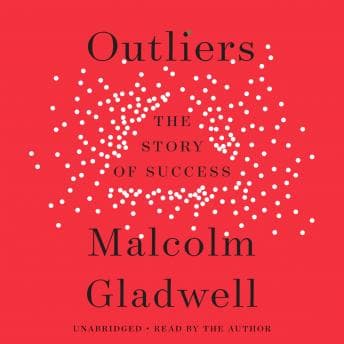

The 10,000-Hour Rule and My Morning Jogs
I started listening to this on a particularly cold Cambridge morning, the kind where your breath fogs up and you question every life choice that led you to exercise outdoors in November. But here's the thing about Gladwell reading his own work - that slightly husky, conversational voice of his made me forget I was freezing. I actually extended my route by a mile just to finish the chapter on the Beatles in Hamburg. (My therapist would be proud. My knees, less so.)
Look, I'll be honest: I came into Outliers with some skepticism. As someone who spends her professional life studying why people do what they do, I'm always a little wary of pop psychology books that promise to explain success in neat little packages. And yes, some of Gladwell's conclusions are... tidy. Maybe too tidy. But the man knows how to construct a narrative, and more importantly, he knows how to tell one.
Why Gladwell Reading Gladwell Just Works
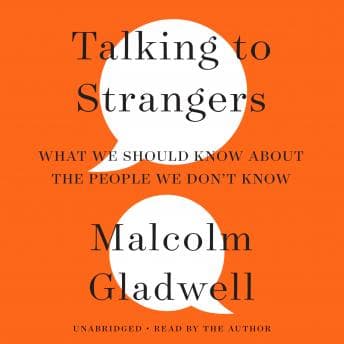
Author-narrated audiobooks are a gamble. I've suffered through enough monotone academics reading their own research papers aloud to know that writing talent doesn't equal performance talent. But Gladwell? He's one of the exceptions that proves the rule.
His delivery is calm without being soporific - there's this quality to his voice that feels like a really smart friend explaining something fascinating over coffee. He knows exactly where to pause, when to let a statistic land, how to build to a punchline. The chapter on why Asian students excel at math (spoiler: it's about rice paddies and cultural attitudes toward hard work, not genetics) could have been dry as dust. Instead, I found myself nodding along, genuinely engaged, even though I'd read the book years ago.
The research actually shows that we retain information better when it's delivered with appropriate emotional modulation and pacing. Gladwell instinctively gets this. His reading of the chapter about the Robbers Cave experiment - okay, that's not in this book, I'm mixing up my Gladwell, but you get my point. He understands rhythm. He understands emphasis. And he understands that sometimes you need to slow down and let the listener catch up with an idea.
The Psychology of Success (And Where It Gets Complicated)
What makes this book compelling from a behavioral psychology perspective is that Gladwell is essentially arguing against the fundamental attribution error - our tendency to overweight personality and underweight situational factors when explaining behavior. The protagonist of every success story, he argues, isn't really the individual. It's the confluence of timing, culture, opportunity, and yes, hard work.
The 10,000-hour rule has become almost cliché at this point (and subsequent research has complicated Gladwell's interpretation considerably - don't get me started), but the underlying insight remains valuable. Success isn't magic. It's not purely talent. It's practice plus opportunity plus the luck of being born at the right time.
I found myself asking: why does this narrative appeal to us so much? And I think it's because it's simultaneously comforting and challenging. Comforting because it suggests success isn't just for the genetically gifted. Challenging because it implies we might be squandering our own opportunities.
My therapist would have thoughts about the chapter on plane crashes and cultural deference, by the way. The idea that Korean Air's crash rate was influenced by hierarchical communication patterns - that's a fascinating case study in how culture shapes behavior at the most critical moments. Gladwell handles this material with appropriate nuance, though I could see some listeners finding the cultural generalizations uncomfortable.
Fair Warning
Psychologically, not everything tracks perfectly. Gladwell has a tendency to find the most compelling anecdote and build outward from there, which is great for storytelling but occasionally shaky for science. The 10,000-hour rule, as I mentioned, has been substantially revised by researchers since this book came out. And some of his causal claims are... let's say ambitious.
But here's the thing - I don't think that matters as much for an audiobook experience. This isn't a textbook. It's a provocation. It's meant to make you think differently about success, not give you a peer-reviewed framework for achieving it. And on that level, it absolutely delivers.
The audio production is clean and professional. No weird background noise, no jarring transitions. At just over seven hours, it's the perfect length for a week of commutes or a couple of long cooking sessions. (I made my grandmother's dal makhani while listening to the chapter on Jewish lawyers in New York. Weird pairing? Maybe. But both turned out great.)
Who Should Listen
This is a fantastic audiobook for anyone interested in the sociology of success - and I mean that broadly. If you've ever wondered why some people seem to catch all the breaks, or if you're tired of the "genius myth" that dominates so much of how we talk about achievement, Gladwell offers a refreshing counter-narrative.
Best for commutes, workouts, or any activity where you want something intellectually stimulating but not so dense you can't fold laundry at the same time. The conversational narration means you can zone out for a minute and still pick up the thread.
Consider skipping if you need rigorous academic citations for every claim, or if you're looking for a step-by-step guide to becoming successful yourself. This is analysis, not advice. And honestly? That's what makes it interesting.
The author understands human nature - or at least, he understands how to tell stories about human nature in ways that feel true. Whether they're actually true in every particular is a question I'll leave to the replication crisis. But as a listening experience? Pretty much essential.