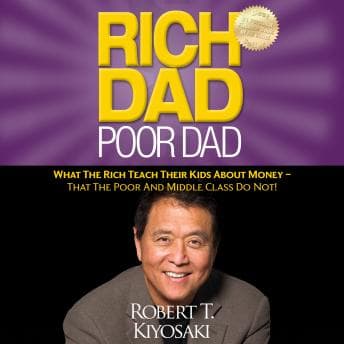

Look, I'm gonna be honest with you. I listened to Rich Dad Poor Dad while stuck in traffic on the 405, which felt appropriate because Kiyosaki's core message is basically "stop being stuck in traffic on the 405 of life." Get out of the rat race. Stop trading time for money. You know the drill.
Here's the thing though - I've been putting off this book for years. Years. Every business bro I've ever met has recommended it like it's scripture. My Uber driver recommended it. My barber recommended it. At some point, I had to just listen to the damn thing.
The Bottom Line (Because I Know You're Busy)
This book has maybe 90 minutes of actual insight stretched across 6 hours. At 2.0x speed, that's still 3 hours of your life. The core concepts - assets vs liabilities, making money work for you, financial literacy isn't taught in schools - are genuinely valuable. Revolutionary, even, for someone who's never thought about money beyond "earn more, save more."
But here's what kills me. My parents figured this out without a book. They bought rental properties in Koreatown in the 90s while running a dry cleaning business. No TED talk. No Rich Dad. Just immigrant hustle and common sense. Now Kiyosaki's telling the same story with parables and it's sold 40 million copies.
(I'm not bitter. Okay, I'm a little bitter.)
Tim Wheeler Does the Heavy Lifting
Tim Wheeler narrates this version, and honestly? He's the reason I finished it. His delivery is clean, professional, almost conversational. He doesn't oversell the material, which is smart because Kiyosaki's prose already leans motivational-speaker-at-a-hotel-conference-room. Wheeler keeps it grounded.
The pacing works well for commute listening. Nothing too fast, nothing that made me zone out - and trust me, I zone out easily when someone's explaining the same concept for the third time using a different analogy. Wheeler's voice has this steady, trustworthy quality that makes the repetition less painful.
That said, there's not much character work here. It's basically a lecture with anecdotes. Wheeler reads "Rich Dad" quotes and "Poor Dad" quotes with subtle tonal shifts, but don't expect a full-cast production. This is one guy explaining financial philosophy for six hours. He does it well. Just know what you're getting.
What Actually Lands
Okay, credit where it's due. A few things genuinely clicked for me:
The asset vs liability framework. Kiyosaki's definition - assets put money in your pocket, liabilities take money out - is stupidly simple and stupidly useful. Your house? Liability. That rental property generating income? Asset. I've seen clients at startups confuse these constantly. This mental model alone is worth the listen.
The "work to learn" philosophy. Skip the highest-paying job for the one that teaches you the most. This is advice I give to every early-career consultant who'll listen. Kiyosaki nails why.
The fear/greed cycle. Most people oscillate between fear of not having enough money and greed for more stuff. This keeps them trapped. It's not groundbreaking psychology, but hearing it articulated clearly - yeah, that hit.
What Doesn't
The book is aggressively light on specifics. Kiyosaki tells you to invest in real estate and businesses but gives almost no tactical guidance. It's all "think different" and "take risks" without the how. For a book that's supposedly about financial education, there's shockingly little actual education.
Also - and I say this as someone who respects hustle - the "Rich Dad" character feels... constructed. There's been reporting questioning whether he even existed. I don't know, and honestly, it doesn't matter for the concepts. But if you're someone who needs your gurus to be 100% authentic, fair warning.
The repetition is brutal. Skip to chapter 5. Thank me later. The first few chapters hammer the same points with different stories. I get it - some people need repetition to absorb ideas. But at 2.0x speed, I was still checking how much time was left.
Who Should Listen
If you're 22 and have never thought critically about money beyond "get a good job" - this is essential. Seriously. The mindset shift alone could change your trajectory.
If you're a seasoned investor or entrepreneur? You probably already know everything here. Listen to confirm your priors, I guess. Or skip it entirely and read the Wikipedia summary.
If you're somewhere in between - maybe you've read a few finance books but feel stuck in the employee mindset - there's value here. Just don't expect a roadmap. This is philosophy, not strategy.
The Verdict
Jenny asked me what I thought when I got home. I said "It's the business book equivalent of 'eat less, move more' for weight loss." Technically correct. Genuinely helpful for beginners. Frustratingly vague for anyone wanting depth.
Tim Wheeler's narration makes it a smooth listen. The audio quality is solid. At 1.25x or 1.5x speed, this is perfect commute material - not demanding enough to require full attention, substantial enough to feel productive.
Bottom line: If you've somehow avoided this book for 25 years like I did, it's worth the listen once. The core concepts have aged well even if the specific investment advice hasn't. Just don't expect it to make you rich. That part's still on you.