
The Commute That Disappeared
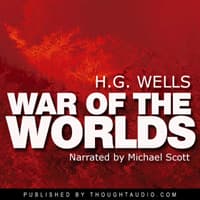
So there I was, stuck in bumper-to-bumper traffic on the 405 - you know, the kind where you start questioning every life choice that led you to this moment - when Michael Scott's voice cut through my frustration with those first ominous observations of Mars. And honestly? I forgot I was sitting in traffic. Six hours and thirty-eight minutes later (spread across a week of commutes), I emerged having experienced one of sci-fi's most foundational texts in a way I hadn't expected.
Look, I've read War of the Worlds before. Back in college, probably. But hearing it? Different beast entirely.
Wells Through Modern Ears
Here's the thing about H.G. Wells - the man basically invented the alien invasion genre in 1898, and it's wild how much still holds up. The slow build from "hey, weird lights on Mars" to "oh God, they're incinerating everything" is masterfully paced. Wells understood something that a lot of modern sci-fi forgets: dread is more effective than spectacle. The narrator (the character, not Scott) spends so much time just... observing. Processing. Trying to make sense of something his Victorian brain can't comprehend.
And that's where this audiobook format really shines. Wells wrote in this journalistic, almost documentary style - first-person accounts, detailed descriptions of locations, the mundane details of survival. It reads like someone's actual diary of the apocalypse. Hearing it spoken aloud amplifies that intimacy in a way I wasn't prepared for.
The destruction of London hit different this time around. Maybe it's because I've consumed so much post-apocalyptic media since my first read, but Wells' restraint feels almost radical now. No heroic last stands. No chosen one. Just ordinary people running, hiding, dying. The scene with the curate - where the narrator is trapped in a ruined house with this increasingly unhinged clergyman - is genuinely claustrophobic. I found myself holding my breath during my morning commute, which probably looked weird to the guy in the Honda next to me.
The Voice Behind the Invasion
Okay, so Michael Scott. (Not that Michael Scott, obviously.) His narration is... solid. Rich voice, good pacing, handles the Victorian prose without making it feel stuffy. He brings genuine urgency to the action sequences and appropriate gravitas to the quieter moments of despair.
But - and I gotta be honest here - the character differentiation isn't his strongest suit. When you've got dialogue between the narrator and the artilleryman, or the narrator and his brother, it can get a little muddy. I found myself rewinding a few times to figure out who was speaking. Not a dealbreaker, but noticeable.
There's also the accent situation. Some reviewers have mentioned his American accent feeling out of place for a story so deeply rooted in English geography and sensibility. I get that criticism. When he's describing Woking or Primrose Hill or the Thames, there's a slight disconnect. But honestly? After about an hour, I stopped noticing. The story's momentum carries you past it.
What Scott absolutely nails is the tone of creeping horror. The Martians aren't just scary because they have heat-rays and tripods - they're scary because they're indifferent. They harvest humans like we harvest wheat. Scott captures that cosmic horror vibe perfectly. His reading of the "intellects vast and cool and unsympathetic" passage gave me actual chills.
Fair Warning
This is a 125-year-old novel. It reads like one. If you're expecting the pacing of modern thrillers, you might find yourself checking how much time is left. Wells takes his time. There are lengthy descriptions of Martian biology and machinery that, while fascinating from a historical perspective, can drag if you're not in the right headspace.
Also - and this is a Wells issue, not a Scott issue - the ending is famously anticlimactic. If you somehow don't know how it ends, I won't spoil it, but let's just say it's less "Independence Day" and more "whoops, biology happened." It's thematically brilliant (humans aren't the heroes of their own survival), but emotionally it can feel like a letdown.
The production is clean but bare-bones. No sound effects, no music, no bonus content. Just Scott and Wells. Personally, I prefer it that way for classics - I want the text, not someone's interpretation of what a tripod should sound like. But if you're used to more produced audiobooks, this might feel sparse.
Who Should Queue This Up
If you're a sci-fi fan who's never actually experienced the source material for about 80% of alien invasion tropes, this is essential listening. It's like finally watching Citizen Kane after years of seeing it referenced - suddenly everything clicks into place.
If you've seen the Spielberg movie (or the Cruise one, or the BBC series, or... there are a lot of adaptations), the book is a different animal. More intimate, more psychological, more concerned with the narrator's internal collapse than external action.
Commuters, this is your jam. The chapter structure breaks nicely into 20-30 minute chunks. I'd bump it to 1.25x speed if you're comfortable with that - Scott's deliberate pacing can handle the acceleration without losing clarity.
Skip if: you need constant action, you're bothered by period-appropriate prose, or you're looking for a narrator who does distinct character voices.
The Bottom Line
Is this the definitive War of the Worlds audiobook? Probably not - I've heard the Stephen Fry version is excellent, and there's something to be said for a British narrator tackling British source material. But Scott delivers a competent, engaging performance of a foundational text. It made my commute disappear for a week, and reminded me why Wells' vision of alien invasion has haunted our collective imagination for over a century.
The Martians may have lost to bacteria, but this story? Still infectious.