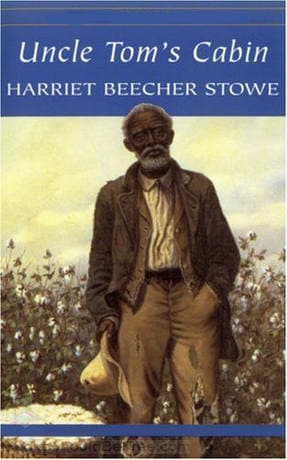

Look, I'll be honest - I almost didn't finish this one. Not because it's bad. Because it's heavy. I started Uncle Tom's Cabin during a cross-country drive last month, figured 18 hours would eat up most of the trip. What I didn't account for was needing to pull over twice just to... process. This isn't background listening. This is the kind of book that demands you sit with it.
The Weight of History in Your Ears
So here's the thing about listening to a book that literally helped spark a civil war - it hits different in audio. Harriet Beecher Stowe wrote this in 1852, and yeah, some of the language feels dated, some of the characterizations make you wince (we'll get to that), but the emotional core? Still devastatingly effective. The scene where Eliza crosses the ice with her baby - I've read about it in probably a dozen history classes. Hearing it unfold in real time, with John Greenman's voice cracking just slightly on the right words? That's something else entirely.
Greenman brings this warm, almost pastoral quality to the narration that works surprisingly well. His Tom isn't a caricature - there's dignity there, a quiet strength that comes through in the measured pacing. When Tom's faith gets tested (and boy, does it get tested), Greenman doesn't oversell the emotion. He lets Stowe's words do the heavy lifting, which is the right call.
That said - and I want to be real here - the dialect work is... uneven. When Greenman voices the enslaved characters, there's this tightrope he's walking between historical accuracy and modern sensibility, and he doesn't always land it cleanly. Some listeners find it distracting. I get that. It's a genuine criticism. But I also think there's no perfect solution here - you're either going to sound too modern or too uncomfortable. He chose a middle path.
Where Stowe's Genius (and Limitations) Show
Okay, so - full disclosure - I had to grapple with this book in ways I didn't expect. Stowe was an abolitionist writing to convince white Northerners that slavery was evil. She succeeded spectacularly at that. But she was also a white woman in 1852, and some of her characterizations lean hard into the "noble suffering" trope that modern readers rightfully critique. The title character's name has become shorthand for a certain kind of problematic portrayal, and... yeah, I see where that comes from.
But here's what surprised me: the book is way more complex than its reputation suggests. Characters like George Harris push back against oppression with anger and defiance. Eliza's escape is pure agency and determination. Even Tom's faith isn't passive acceptance - it's active resistance through maintaining his humanity when the system is designed to strip it away. Stowe was writing propaganda, sure, but she was writing effective propaganda that moved millions of people to action.
Listening to it rather than reading it gave me a different perspective. The pacing is slow - 18 hours is a commitment - but that slowness lets the horror accumulate. You're not rushing through the auction scenes or the family separations. You're living in them. By hour twelve, I was genuinely angry in a way that reading probably wouldn't have achieved.
The Listening Experience (Practical Stuff)
So, some logistics. At 18+ hours, this is a marathon, not a sprint. I'd recommend breaking it into chunks - maybe a few hours at a time with breaks to decompress. The audio quality is clean, nothing fancy, no sound effects or music (which is appropriate for the material). There's a brief intro from Greenman that gives some historical context, though honestly it's pretty surface-level.
I bumped the speed to 1.25x for some of the slower middle sections - Stowe has a tendency to sermonize, and while the religious themes are central to the book's argument, they can drag. At regular speed, I found my attention wandering during some of the longer theological passages. Your mileage may vary.
I've seen people recommend the Robin Miles version as an alternative, and if you want a more dynamic performance, that might be worth checking out. Greenman's approach is more restrained, more literary - which I personally appreciated, but it's not going to work for everyone.
Who Should Listen
This isn't a casual listen. Let's be clear about that. If you're looking for something to half-pay-attention-to while doing dishes, this ain't it. But if you want to understand a piece of literature that genuinely changed American history - and you want to experience it in a way that emphasizes its emotional impact - this audiobook delivers.
I'd especially recommend it for:
- History buffs who want to engage with primary sources
- Book club groups willing to have difficult conversations
- Anyone who read it in high school and only remembers the SparkNotes version
Skip it if:
- You need faster pacing to stay engaged
- Dated dialect in narration is a dealbreaker for you
- You're not in a headspace for emotionally heavy material
Final Thoughts
I finished Uncle Tom's Cabin at a rest stop somewhere in Nebraska, sitting in my car as the sun went down. And I just... sat there for a while. It's not a perfect book. It's not even a perfect audiobook. But it's an important one, and Greenman's narration - for all its imperfections - serves the material with respect and care.
Lincoln supposedly called Stowe "the little lady whose book started the Civil War." Whether or not that's apocryphal, listening to this made me understand why people believed it. Some books change minds. This one changed a nation. That's worth 18 hours of your time.