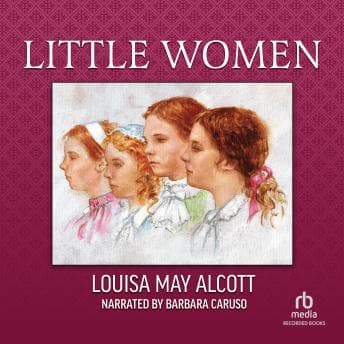

I was grading sophomore essays on The Great Gatsby - the usual parade of "Gatsby was rich and sad" analyses - when I decided I needed something to restore my faith in readers. So I put on Little Women and let the March sisters drown out the sound of my red pen bleeding all over Nick Carraway's passive narration.
Nineteen hours later, I'm wrecked. In the best way.
What Alcott Gets Right (And Why We Still Teach This)
Look, I've assigned Little Women exactly twice in my career. Both times, students complained it was "old" and "nothing happens." And both times, by the end, at least three kids admitted they cried. That's the Alcott magic - she sneaks up on you. The novel isn't about grand events. It's about the thousand small moments that shape a person.
Listening to it, rather than reading it, I finally understood why Marmee's quiet lessons land so hard. When she tells Jo that anger is her bosom enemy, it's not a lecture. It's a mother who knows her daughter. And hearing that delivered by actual voices rather than reading it on a page? Different experience entirely.
The Civil War backdrop does what great historical fiction should - it creates stakes without overwhelming the domestic story. The March family's "relative poverty" (and honestly, they're doing fine compared to actual poor families, but I digress) becomes a crucible. These girls aren't just growing up. They're growing up while their father is gone, while their mother holds everything together, while the world outside their little house is literally at war.
The Full Cast Gamble
Here's the thing about full cast productions: they're either transcendent or a disaster. No middle ground.
This one mostly works. Each sister gets her own distinct voice, which solves the biggest problem with single-narrator classics - keeping four teenage girls from blending into one generic "young woman" voice. Jo sounds appropriately impatient and impulsive. Beth is softer, almost painfully gentle. Amy's theatrical streak comes through in how her lines are delivered. And Meg - poor overlooked Meg - finally gets to be the steady eldest rather than just "the boring one."
(My students always forget Meg exists. It's honestly rude.)
The character differentiation extends beyond the sisters. Laurie sounds young and eager in the early chapters, which matters because you need to believe he'd sneak into their theatricals and befriend them immediately. Professor Bhaer's later entrance works precisely because his voice carries a different weight - older, more considered, the kind of man who'd appreciate Jo's writing even when it's rough.
That said, not everything lands perfectly. Some reviewers have noted the production can be uneven - certain actors maintaining their tone better than others. I noticed this most in the scenes with minor characters. The core cast holds steady, but once you get to Aunt March or some of the peripheral figures, the quality wobbles a bit. Not enough to ruin anything, but enough that I noticed.
The Listening Experience
Nineteen hours is commitment. I'm just going to say that upfront.
I listened over about two weeks, mostly during my lakefront walks with Denise and late-night grading sessions. The pacing - Alcott's, not the narration's - is deliberate. There are chapters that meander. The moralizing can feel heavy by modern standards. (Alcott was writing for a specific purpose, and subtlety wasn't always part of the plan.)
But when this audiobook hits, it hits. The Beth chapters. You know the ones. I had to stop walking and just stand there, looking at the lake like an idiot, because I couldn't see through the tears. Nineteen years of teaching, twenty-plus readings of this novel, and the audiobook version finally got me.
This reminds me of what Hemingway said about writing - that the dignity of movement of an iceberg is due to only one-eighth of it being above water. Alcott's prose seems simple on the surface. But underneath? Decades of weight. And hearing it performed brings that underwater portion closer to the surface.
The audio production itself is clean. I didn't notice the issues some reviewers mentioned about sound quality or skipping, so maybe that was an earlier edition that's been fixed. Worth checking recent reviews if you're worried.
Who Should Listen
If you've never read Little Women - first of all, how? - this is a lovely way to experience it. The full cast brings energy to what might otherwise feel dated.
If you've read it before, this is worth revisiting. I thought I knew this book. The audiobook proved me wrong.
If you loved the 2019 Gerwig film (and honestly, who didn't?), this gives you the source material with its own kind of performance. Different energy, same heart.
Fair warning: the pacing is period-appropriate. If you need constant plot momentum, this might frustrate you. The novel is episodic by design - Alcott serialized it originally. Some chapters feel like standalone stories. That's feature, not bug, but your mileage may vary.
Don't speed this up. The prose deserves to be savored. I know that makes me sound ancient, but I'm a 1.0x truther and I'm not apologizing.
Final Thoughts
My students would hate this. Too long. Too slow. Nothing blows up.
I love it.
This is why we still read the classics - and why sometimes we should listen to them instead. The full cast turns Little Women into something close to a radio play, letting Alcott's character work breathe in a new way. It's not a perfect production. Some actors are stronger than others, and nineteen hours is genuinely a lot. But if you're willing to settle in?
This is comfort food for the soul. And honestly, grading papers at 11 PM, watching teenagers misspell "American Dream," I needed it.