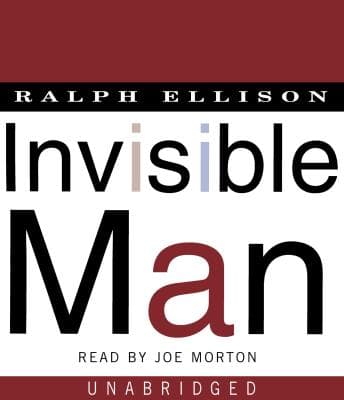

The OG Sci-Fi That Still Holds Up
Look, I'll be honest - I grabbed this one because it's under 5 hours and I needed something to fill a weird gap between finishing Project Hail Mary (again) and starting the next Murderbot. Classic sci-fi, short runtime, seemed like a safe bet for a couple commutes. What I didn't expect was to be genuinely creeped out on a packed 7AM Caltrain surrounded by other tech zombies.
H.G. Wells wrote this in 1897. Let that sink in. The dude was imagining the ethics of invisibility technology before we even had radio. And the wild thing is - the science doesn't feel as dated as you'd think. Sure, he hand-waves some of the physics (something something refractive index), but the core concept and its implications? Still relevant. This is basically a cautionary tale about a brilliant scientist with zero emotional intelligence who gains power and immediately becomes a menace. So, you know. Relatable content for anyone who's worked in tech.
Alex Foster Does the Heavy Lifting
I couldn't find much about Alex Foster online, but based on this performance - the guy knows what he's doing. His voice has this slightly formal, period-appropriate quality that fits the Victorian setting without feeling stuffy or theatrical. The pacing is solid. Not too slow, not rushing through the atmospheric bits. I listened at 1.25x and it felt natural.
Where Foster really shines is in differentiating the characters. The Invisible Man himself - Griffin - comes across as increasingly unhinged as the story progresses, and Foster captures that descent into paranoia and megalomania without going full cartoon villain. There's this desperate edge to his voice that made me genuinely uncomfortable. The townspeople in the village where Griffin terrorizes everyone? Foster gives them this collective bewildered quality that's almost darkly funny. You can hear them trying to process something their brains simply cannot accept.
That said, some reviewers have mentioned Foster's tone can feel a bit flat in places, and I get it. There are stretches - especially in the middle where Griffin is monologuing about his experiments - where things drag a little. But honestly? That's more Wells than Foster. Victorian authors loved their exposition dumps. It's part of the package.
The Story Itself (Minor Spoilers, I Guess?)
So here's the thing about The Invisible Man that surprised me: it's not really a power fantasy. It's a horror story about isolation. Griffin discovers invisibility, and instead of becoming some superhero or master thief, he just... falls apart. He can't eat without people seeing food floating in his stomach. He can't sleep without leaving an impression on beds. He's constantly cold. Every interaction becomes a potential disaster.
The science actually holds up in a weird way - Wells thought through the practical problems of invisibility more than most modern takes. Griffin is basically a prisoner of his own "gift." And when he starts lashing out at the world that can't see him? It feels earned. Terrible, but earned.
The pacing picks up significantly in the final third. There's a manhunt sequence that had me genuinely tense even though I basically knew how it would end. Wells was really good at building dread.
Perfect For: Commute, Chores. Skip For: Deep Work
This is ideal audiobook material. It's short enough to finish in a few sessions, atmospheric enough to keep you engaged, but not so complex that you'll lose the thread if you zone out for a minute while someone's loud phone call interrupts your listening. (Yes, this happened. Twice.)
The ROI on this audiobook is solid - you get a foundational sci-fi classic, a decent performance, and some genuinely thought-provoking themes about power and isolation. All in under 5 hours. That's like two commutes for me.
Who should listen: Anyone who wants to understand where modern sci-fi tropes came from. Fans of Black Mirror-style "technology gone wrong" stories. People who liked the 2020 movie and want to see how different the source material is (spoiler: very different, but the core anxiety is the same).
Who should skip: If you need fast-paced action or can't deal with Victorian prose rhythms, this might test your patience. The middle section is slow. I won't lie.
The Verdict
It's wild that a book from 1897 still has something to say about the dangers of unchecked scientific ambition and the psychological cost of being unseen by society. Wells was cooking before cooking was a thing. Alex Foster delivers a performance that serves the material well - not flashy, but competent and immersive where it counts.
Is it Ray Porter? No. But it's a solid listen for a classic that deserves more attention than it gets. I finished this in 3 commutes and I'm glad I did. Sometimes the old stuff hits different.