
The "Disney Lied to You" Tour
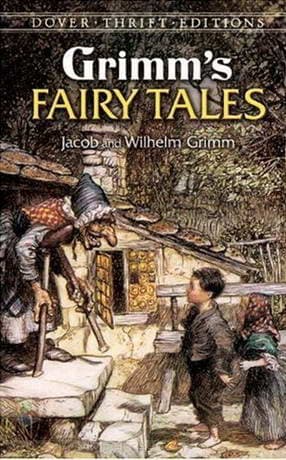
I was sitting in my classroom at 4:30 PM on a Tuesday, staring at a stack of Lord of the Flies essays that weren't going to grade themselves, when I decided I needed something... different. Something that wasn't a teenager misinterpreting Golding. So I fired up the LibriVox recording of Grimms' Fairy Tales.
(Yes, I listen to public domain audiobooks. Have you seen a teacher's salary lately? Audible credits are a luxury item in the Williams household.)
Here’s the thing about the Brothers Grimm—and I tell my students this every year when we do our folklore unit—Disney sanitized the life out of these stories. If you're expecting singing birds and happy endings, you're in the wrong forest. We're talking about stepsisters slicing off their own toes to fit into a slipper. We're talking about birds pecking eyes out. It’s dark, it’s violent, and honestly? It’s fantastic. It’s the original horror anthology before horror was a genre.
The LibriVox Roulette
Let's talk about the elephant in the room: the narration.
If you've never used LibriVox, here's the deal: it's volunteers. Regular people. Bless their hearts, truly. They are doing the lord's work making literature accessible. But listening to a LibriVox collection is like a box of chocolates where half the chocolates might actually be rocks.
This is an anthology recording, which means you get a different voice every few stories. It’s inconsistent. Wildly inconsistent.
One minute, you’re listening to a narrator who sounds like a retired BBC broadcaster—Bob Neufeld, if you’re reading this, you are a national treasure and your reading is elegant, expressive, and frankly, better than some paid narrators I’ve heard. He treats the text with this gravitas that makes you lean in.
Then the next chapter starts, and suddenly it sounds like someone is recording on a Nokia flip phone inside a moving wind tunnel.
There’s a reading of "Hans in Luck" where the narrator does a voice that I can only describe as... unsettling. Not "spooky story" unsettling, but "I need to check the locks on my doors" unsettling. And not in a good way. My wife Denise walked in while I was doing dishes listening to it and asked if I was listening to a hostage tape.
Why It Still Works (Mostly)
Despite the audio whiplash, there is something weirdly fitting about the patchwork narration. These stories were originally oral tradition. They were told by grandmothers, travelers, drunks at the tavern, and village elders. They weren't meant to be uniform.
So when you get a narrator with a thick accent, or one who reads a bit too fast, or one who does funny voices for the wolf—it kind of adds to the vibe? It feels like a community project.
(Okay, except for the one with the background traffic noise. That just broke the immersion. I don't think there were Honda Civics in the Black Forest.)
But the stories themselves? They hold up. The prose is sparse—Grimm didn't waste time with flowery descriptions. It's just action, consequence, moral. Bam. "Rapunzel" and "Hansel and Gretel" are obviously the hits, but the deep cuts like "Snow White and Rose Red" are where the real weirdness lives.
The Verdict
Look, it’s free. I can't in good conscience tell you to go spend $25 on a celebrity-narrated version when this exists, especially if you just want to dip your toes into the original folklore.
Is it perfect? Absolutely not. It’s messy. You’ll probably skip a few tracks because the audio quality grates on your nerves. But for a free commute listen or something to play while you're ignoring a faculty meeting on Zoom? It does the job. Just maybe keep the volume down during the violent parts if there are kids around. Disney didn't prepare them for this.