
The Accidental Time Machine
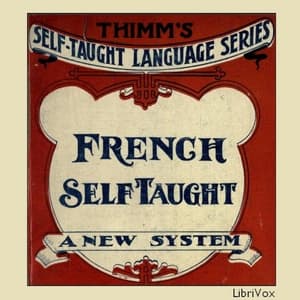
Look, I wasn't planning to learn French while grading sophomore essays about The Great Gatsby. But there I was at 11:30 PM, red pen in hand, when I decided I needed something—anything—to keep me from writing "Nick is not a reliable narrator" for the fortieth time. So I pulled up this 1890s French course on LibriVox. Because apparently that's who I am now.
And honestly? It was kind of delightful. In a weird, dusty, "why does this exist" sort of way.
Franz Thimm's French Self-Taught is not a modern language app. There are no gamification points. No cheerful owl threatening your family if you miss a lesson. This is Victorian-era language instruction, pure and simple—vocabulary lists, verb conjugations, and phrases designed for a world where you might genuinely need to tell your washerwoman that she's scorched your flannel petticoat. (I'm not making that up. That's in there.)
The Voices That Make It Work
Here's the thing about LibriVox volunteer productions: they're a mixed bag. You know this going in. But this particular recording does something smart—the French sections are read by native French speakers. Michaël Cadilhac, Nadine Eckert-Boulet, and ani poirier handle the French content, and their pronunciation is genuinely useful. Clean. Clear. The kind of thing you could actually repeat back and not embarrass yourself at a Parisian café.
Ruth Golding handles the English portions, and she's got this lovely, patient schoolteacher quality to her delivery. (Takes one to know one.) There's some variation in pacing between the different readers—inevitable with volunteer productions—but nothing that derails the experience. The audio quality is solid throughout. No weird background noise, no jarring transitions.
What I appreciated most was the deliberate pace. The narrator understands that pause is punctuation. When you're trying to actually absorb vocabulary, that breathing room matters. I found myself repeating phrases during my lakefront walks with Denise, who now knows how to ask for a glass of water in French and also how to complain about poorly laundered linens. (The second one comes up less often, but you never know.)
The Charming Absurdity of It All
Let's be real for a second: this book is hilarious. Not intentionally, but in that beautiful way that happens when something from 1890 crashes into 2024. The vocabulary sections are genuinely useful—colors, numbers, days of the week, basic verbs. Standard stuff. But then you hit the phrase sections and suddenly you're learning how to say "The coachman has been drinking" and "Your bill is exorbitant."
This reminds me of what I always tell my students about reading old texts: the weird parts are features, not bugs. They're windows into how people actually lived. Thimm wasn't writing for tourists who wanted to order croissants. He was writing for travelers, businesspeople, maybe colonials—people who needed to navigate a full domestic life in a foreign language. The phrases reflect that. They're practical in a way that reveals an entire social world.
My students would hate this. I love it.
Who This Is Actually For
Okay, let me be honest about something: this is not going to replace Duolingo. If you want structured, modern French instruction with progress tracking and speech recognition, this ain't it. The method is old-fashioned. Some of the vocabulary is genuinely obsolete. (When was the last time you needed the French word for "inkstand"?)
But here's who should absolutely listen to this:
Language nerds who appreciate history. If you've ever wondered what language instruction looked like before apps and audio courses, this is a fascinating artifact. Thimm's "Nature Method" was actually progressive for its time—emphasizing practical phrases over grammar drills.
People who want pronunciation practice with native speakers. The French readers are the real value here. Three hours of native French pronunciation, free, organized by topic. That's genuinely useful.
Anyone who needs light background audio. This isn't demanding. It's pleasant. I listened while grading, while cooking, while pretending to pay attention to Principal Martinez's latest initiative. (Worth pausing the faculty meeting for? Maybe not. But it made the meeting bearable.)
Francophiles with a sense of humor. If you can appreciate the absurdity of Victorian phrase books, you'll have a good time.
Fair Warning
The pacing can feel slow if you're used to modern audiobooks. There's no narrative drive here—it's instructional content, organized by category. Some listeners will find this meditative. Others will find it tedious. Know yourself.
Also, the multiple narrators mean some inconsistency. Nothing dramatic, but you'll notice the shifts. And the English sections can occasionally tip toward monotone. Ruth Golding is clear and professional, but she's not performing—she's instructing. Different energy.
The Verdict
I came for the novelty and stayed for the genuine utility. Is this going to make you fluent in French? Absolutely not. But it's three hours of free, well-pronounced French vocabulary and phrases, delivered by native speakers, wrapped in a charming historical package. For the price of nothing, that's a pretty good deal.
The prose deserves to be savored—or at least, the absurdity of it does. There's something wonderful about hearing a Victorian gentleman's idea of essential French phrases read aloud by modern volunteers. It's educational. It's amusing. It's exactly the kind of weird, wonderful thing that makes LibriVox worth exploring.
Just don't expect to use "The washerwoman has torn my nightgown" in actual conversation. Unless your life is significantly more interesting than mine.