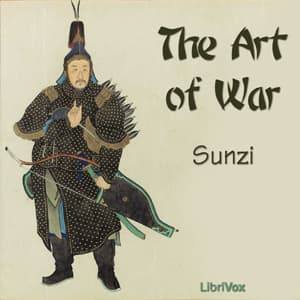

Look, I'll be honest - I've probably started The Art of War like four times over the years. Physical copies, ebooks, even that one translation that tried to make it "modern and accessible" (spoiler: it wasn't). Something about ancient military strategy always felt like homework I was assigning myself. But at 1 hour and 22 minutes? That's basically one commute. No excuses left.
So I finally did it. And yeah, I get it now.
The Voice Behind Two Thousand Years
Michael Scott brings an energy to this that I genuinely wasn't expecting. This isn't some dry, History Channel narrator droning through aphorisms like he's reading a legal document. He's engaged with the material - there's a rhythm to his delivery that makes Sun Tzu's observations feel less like ancient wisdom and more like a really smart friend explaining why you keep losing at chess.
That said, some reviewers have noted his approach can be a bit... much? I can see it. There are moments where the intensity feels slightly mismatched with the text's inherent simplicity. Sun Tzu wasn't writing dramatic speeches - he was writing practical military doctrine. So when Scott punches certain phrases hard, it occasionally pulls you out of the flow. Not a dealbreaker, but worth mentioning.
The pacing works for what this is. At under 90 minutes, there's no filler, no meandering introductions or scholarly context-setting. You're just dropped into the text. Some listeners might want more historical framing - and honestly, I wouldn't have minded a brief intro about the Warring States period - but the stripped-down approach has its own appeal. It's Sun Tzu, uncut.
Why This Still Hits
Here's the thing about The Art of War that nobody tells you: it's not really about war. I mean, it is, technically. But listening to it in 2024, what struck me was how much of it applies to literally anything competitive or strategic. Project management. Negotiations. That ongoing cold war with your neighbor about the fence line. (Okay, maybe not that last one.)
"Know your enemy and know yourself, and in a hundred battles you will never be in peril."
Yeah, sure, that's about military intelligence. But it's also about doing your research before a job interview, or understanding market dynamics before launching a product. The genius of Sun Tzu is that his principles are so fundamental they transcend context. And hearing them spoken aloud - rather than reading them on a page - somehow makes that universality click.
I found myself pausing to think more than I expected. Not because the text is dense (it's actually remarkably straightforward), but because certain lines just... land differently when you hear them. "The supreme art of war is to subdue the enemy without fighting." On paper, that's a nice quote for a LinkedIn post. Spoken with the right weight, it's a genuine philosophy.
Fair Warning
This audiobook won't be for everyone. A few things to consider:
The audio quality seems to vary depending on who you ask. Some listeners report crystal clear production; others mention occasional issues. My experience was fine, but your mileage may vary depending on your platform and equipment.
Also, there's no bonus content here. No author notes (obviously), no historical essays, no modern analysis. You're getting the text and nothing else. If you want context about Sun Tzu's life, the competing translations, or how this text has been interpreted through history, you'll need to look elsewhere.
And if you're expecting narrative - a story with characters and plot - this ain't it. It's strategic philosophy broken into short chapters. More like listening to a really good TED talk than an audiobook in the traditional sense.
The Right Audience
This is perfect for anyone who's been meaning to read The Art of War but keeps putting it off. The short runtime removes every excuse. It's also solid for people who've read it before and want a refresher - hearing it activates different parts of your brain than reading does.
If you're into strategy games, business, leadership, or just enjoy understanding how great thinkers approached problems, this delivers. If you're looking for entertainment or escapism, look elsewhere.
I'd also recommend this for anyone who's tried other versions and bounced off. Scott's energy might be exactly what you need to finally engage with the material. Or it might be too much. Sample it first if you're unsure.
Final Thoughts
Did I have some kind of profound life revelation listening to The Art of War on my Tuesday morning commute? No. But I finally understand why this text has survived for over two thousand years, why business executives quote it in meetings, why it shows up in everything from sports coaching to video game design.
Sun Tzu understood something fundamental about conflict, competition, and human nature. And Michael Scott, for all the occasional over-enthusiasm, makes that understanding accessible in a way my previous attempts with the text never quite achieved.
At 82 minutes, there's no reason not to give this a shot. Worst case, you've spent a commute learning why everyone keeps referencing this book. Best case, you walk away with a new framework for thinking about challenges in your own life.
I'm calling that a win.