
I was grading a stack of junior papers on symbolism in The Great Gatsby - yes, the green light, every single time - when Ruth Golding's voice cut through my exhaustion and reminded me why I fell in love with literature in the first place. Fifteen hours on the Yorkshire moors with Heathcliff and Catherine. My red pen went dry somewhere around chapter twelve. I didn't notice.
This is why we still read the classics.
The Voice Behind the Storm
Look, here's the thing about narrating Brontë: you can't phone it in. The prose is too wild, too raw, too much for someone who's just going to read words off a page. Ruth Golding gets this. Her style is measured and evocative - she understands that pause is punctuation - but when the emotional storms hit, she's right there in the wind with you.
The character differentiation is what really sold me. Heathcliff gets this brooding growl that sits low in the chest, all suppressed rage and wounded pride. Catherine has this wistful edge to her voice that makes you understand exactly why everyone in this godforsaken house loses their minds over her. And Nelly Dean - our narrator within the narrator, because Brontë wasn't going to make this easy - comes through with warmth and judgment in equal measure. Golding shifts between them seamlessly. No jarring transitions, no moments where you lose track of who's speaking.
Now. Joseph. I need to address Joseph.
Some listeners had issues with Golding's interpretation of his Yorkshire dialect. And honestly? I get it. The original text is basically transliterated regional speech that looks like someone had a fight with a typewriter. It's challenging no matter who's reading it. Golding makes choices that prioritize comprehension over strict textual accuracy, and I think that's the right call for audio. My students would hate this. I love it. (Don't tell them I said that.)
What Brontë Gets Right - And Why Audio Amplifies It
I've taught Wuthering Heights maybe a dozen times. I thought I knew this book. But listening to it - really listening, at 1.0x because the author chose those words - revealed layers I'd been skimming over for years.
The structure, for one. The nested narratives that feel clunky on the page become almost hypnotic in audio. You're being told a story by someone who's being told a story by someone who lived it. Golding navigates these frame shifts with enough tonal variation that you always know where you are in the timeline. That's not nothing. This book spans decades and generations and I never once got lost.
And the emotional intensity - this is where audio genuinely elevates the experience. Brontë wrote something brutal here. The mental and physical cruelty isn't softened or romanticized. When Heathcliff is monstrous, he's monstrous. When Catherine is selfish and destructive, you feel the wreckage she leaves behind. Golding's delivery doesn't flinch from any of it. The raw emotion of the prose hits harder through a human voice than it ever did in my own head.
I finished the last chapter walking the lakefront with Denise at sunset. She asked why I looked like I'd been emotionally mugged. I tried to explain the ending. She patted my arm and suggested we get dinner.
Fair Warning
This isn't a comfort listen. Let's be real for a second - Wuthering Heights is a gothic nightmare dressed up as a love story. There's violence, cruelty, revenge that spans generations, and not a single character you'd actually want to spend time with. (Except maybe Nelly, and even she's got judgment issues.) If you're looking for something light for your commute, this ain't it.
Also: fifteen hours. That's a commitment. The pacing is deliberate - which I appreciated, but I could see it feeling slow if you're not in the right headspace. I listened over about two weeks, mixing it in with faculty meetings (sorry, Principal Martinez) and late-night grading sessions. It worked. But if you're the type who needs constant plot momentum, you might struggle with the middle sections.
The regional vernacular throughout can be challenging regardless of narrator. Brontë was committed to authenticity in a way that modern readers sometimes find off-putting. Golding's clear diction helps enormously, but there were still moments I had to rewind and parse what someone was actually saying.
The Verdict
If you loved Jane Eyre, this is its darker, wilder sibling. Less romance, more destruction. Charlotte gave us a love story with a happy ending. Emily gave us a warning about what happens when passion has nowhere to go.
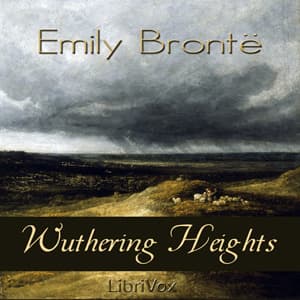
Ruth Golding's narration is pretty much exactly what this text needs - dramatic without being melodramatic, clear without being cold, emotionally invested without losing control. The LibriVox production is clean, the pacing is solid, and the whole thing is free, which means there's basically no barrier to entry.
Worth pausing the faculty meeting for. Worth the fifteen hours. Worth remembering why we still teach the classics even when my juniors would rather analyze literally anything else.
My mom will probably fall asleep during my podcast episode about this one too. But I'm going to record it anyway.