
The Weight of Every Word
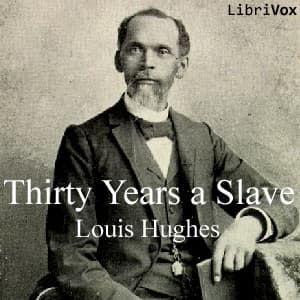
I was grading papers at 11 PM—sophomore essays on Frederick Douglass, actually—when I started this one. The irony wasn't lost on me. Here I am, red pen in hand, marking up teenage attempts to grapple with slavery narratives while Louis Hughes's actual voice fills my headphones. His words, filtered through James K. White's narration, hit different when you're surrounded by seventeen-year-olds trying to understand something that shaped this country in ways we're still unpacking.
Look, here's the thing about slave narratives: they demand a certain kind of attention. You can't half-listen. And at just under five hours, Thirty Years A Slave doesn't overstay its welcome, but it also doesn't let you off easy. Hughes was a house servant for most of his enslavement, which means he saw everything. The intimate cruelties. The daily degradations. The way the McGee plantation in Mississippi operated like a machine designed to grind humanity into profit. And he writes about it with this almost clinical precision that makes it worse, somehow. More real.
White's Measured Approach
James K. White narrates this like he understands that the material doesn't need embellishment. His pacing is deliberate—almost methodical—which works because Hughes himself wrote in this straightforward, documentary style. There's no melodrama in the delivery. When Hughes describes the "cruel and unusual punishments" doled out by Boss McGee and his wife (who Hughes paints as genuinely unhinged), White doesn't lean into horror-movie territory. He just... presents it. And that restraint makes the horror land harder.
I couldn't find much about White's other work online, but based on this performance, he gets something crucial: the power of pause. When Hughes recounts a particularly brutal moment, White gives it space. He lets the silence do work. This is what I try to teach my students about reading aloud—that pause is punctuation. White understands that instinctively.
Now, some listeners have noted his accent work can feel a bit heavy at times. I didn't find it distracting, personally, but I can see how it might pull some people out of the narrative. It's a LibriVox recording, so we're not talking studio-polished production here. The audio quality is decent but not pristine—there are moments where levels shift slightly. If you're an audio snob, fair warning.
What Hughes Actually Accomplished
This is why we still read primary sources. (My students would hate that sentence. I don't care.)
Hughes does something remarkable in this narrative: he documents the systems. Not just the personal suffering—though there's plenty of that—but how the entire apparatus functioned. How cotton got planted, harvested, processed. How the household ran. How holidays were weaponized as psychological control. How enslaved people were moved between properties like furniture. The McGee empire stretched from Mississippi to Tennessee, and Hughes maps its operation with the precision of someone who watched it all while being invisible to those in power.
The prose deserves to be savored. Hughes published this in 1897, over thirty years after emancipation, and you can feel him wrestling with how to make readers understand something they'd rather forget. He's not writing for sympathy. He's writing for the record. There's a line in the introduction where White notes that Hughes wanted to describe "the influence that the institution of slavery had on this country during the two hundred years in which it existed here, and the influence it continues to have." That last part hits. It's 2024 and we're still having these conversations.
Who This Is For
If you're teaching American history or literature—or if you have kids in school reading Douglass or Harriet Jacobs—this is essential context. Hughes's perspective as a house servant is different from field narratives, and that difference matters. He saw the white family up close. He understood their psychology in ways that are genuinely unsettling to read.
This pairs well with The Underground Railroad or Beloved if you're building a reading list, but honestly? Read Hughes first. Colson Whitehead and Toni Morrison are doing literary interpretation of this history. Hughes is giving you the raw material.
It's not easy listening. I paused it multiple times during that first grading session—not because it was boring, but because I needed to process. By chapter three, I'd given up on the essays entirely. Some stories demand your full attention.
The Verdict
At under five hours, this is compact enough for a weekend of focused listening. I'd recommend it for commutes only if you're okay with arriving at work emotionally wrecked. Better for evening listening when you can sit with it.
The production isn't perfect—this is volunteer narration, not a big studio job—but White's thoughtful performance serves the material well. He doesn't get in the way of Hughes's voice, which is exactly what a narrator should do with a text this important.
My students would probably complain it's "too old" or "too slow." But that's exactly why I'm assigning it next semester. Some things shouldn't be rushed through. Some things need to be heard at exactly the pace they were written.
Worth pausing the faculty meeting for. Worth pausing everything for, really.