The Long Haul
Forty-eight hours. That's basically what you're signing up for here. I started this one on a client trip to Dallas and finished it three weeks later - and honestly, I'm still thinking about it. Ranger got pretty tired of my truck being parked in the driveway while I sat there finishing chapters instead of going inside. (Linda thought I was avoiding her. She wasn't entirely wrong - I just needed to know what happened to Nick Andros.)
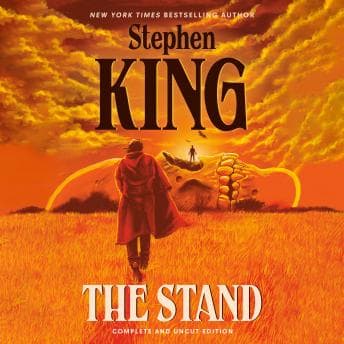
Let me cut to the chase: The Stand is a commitment. This is the uncut version, which means King put back everything the publishers made him trim in '78. All 47 hours and 50 minutes of it. Is every single minute necessary? No. But is it worth your time? Absolutely.
Why This Story Still Hits
Look, I've been through enough pandemic training exercises and CBRN briefings to know that King's setup is eerily plausible. A weaponized superflu escapes a government lab, and within weeks, 99% of humanity is dead. The author clearly did their homework on how fast something like this would spread - the chain of transmission from that initial breach at the research facility to complete societal collapse feels way too real. I've seen this scenario play out in tabletop exercises, minus the supernatural elements. The mundane horror of it - people coughing in grocery stores, the military checkpoints that come too late, the bodies piling up - that's the stuff that got under my skin more than any walking dude in cowboy boots.
But here's the thing. King isn't really writing about a plague. He's writing about what happens after. When the dust settles and the survivors have to choose sides. Good versus evil, sure, but it's messier than that. Mother Abagail and her group in Boulder aren't saints. Randall Flagg's crew in Vegas aren't all monsters. People are people, even at the end of the world. Some of my favorite characters - Larry Underwood, the washed-up rock star trying to be better than he was; Nick Andros, the deaf-mute drifter who becomes a natural leader - they're not heroes because they're heroic. They're heroes because they keep showing up.
The military stuff? Mostly fine. King doesn't try to get too technical, which is smart. He focuses on the human element - the soldiers at the roadblocks who know they're already dead, the general who has to make impossible calls. A few details made me wince (the chain of command stuff gets fuzzy), but nothing that pulled me out of the story.
Gardner Behind the Mic
Grover Gardner has to carry this beast for nearly 48 hours, and he does it. Stu Redman's quiet Texas drawl, Frannie's New England practicality, the Trashcan Man's unhinged rambling - Gardner differentiates them well enough that I never lost track of who was talking, which is no small feat with a cast this size.
His Randall Flagg is particularly good. There's this oily charm underneath the menace, like a recruiter who knows exactly what you want to hear. When Flagg shows up in someone's dreams, Gardner shifts into something almost seductive, and it works. You understand why people follow him.
That said - and this is a minor gripe - some of the female voices feel a bit thin. Frannie and Lucy Swann could use more distinction. And there were a few stretches in the middle where Gardner's pacing felt like it was dragging, though honestly that might be King's fault more than his. The Boulder Free Zone committee meetings are... a lot. (Democracy is messy, even in fiction.)
I listened at 1.25x for most of it, which I'd recommend. Gardner's natural pace is measured, almost deliberate, and bumping the speed keeps things moving without losing the emotional beats.
Where It Lost Me (Briefly)
I'm not going to lie - there's a stretch around hours 25-30 where the momentum stalls. The survivors are settling in, building their communities, and King takes his time with the domestic stuff. Committee meetings. Relationship drama. A lot of walking. If you're coming to this for action, you'll be checking your phone.
But then Flagg makes his move, and suddenly you're white-knuckling through the last third. The journey to Vegas, the confrontation, the ending - it all pays off. King earns those slow chapters by making you care about these people before he puts them in harm's way.
The supernatural elements might bug some folks. This isn't hard sci-fi. Mother Abagail has visions, Flagg has powers that are never fully explained, and the climax involves what I can only describe as divine intervention. If you need everything grounded in reality, fair warning. But I've seen enough weird stuff in my career to know that not everything has a logical explanation. Sometimes you just have to accept what's in front of you.
The Verdict
Worth your time? Here's the debrief: The Stand is one of those rare books that justifies its length. Not every page, but enough of them. It's about survival, sure, but it's really about choice - who we become when the structures fall away. The audiobook format works well for something this sprawling; you can chip away at it during commutes and long drives without losing the thread.
Who should listen: Anyone who wants an epic that takes its time. Fans of post-apocalyptic fiction who want characters over action. People who've read King before and want his magnum opus.
Who should skip: If you need tight plotting and fast pacing, this ain't it. If supernatural elements in your apocalypse fiction bug you, look elsewhere.
Ranger approved this one. He sat through the whole thing without complaint, which is more than I can say for some of my audiobooks. Mission accomplished, Mr. King. Even if you did make me sit in my truck for an extra hour to finish the ending.