
I was halfway through my morning jog along the Charles River when Alicia Berenson shot her husband five times in the face. And then - nothing. She just stopped talking. Forever.
I actually stopped running. Just stood there on the path like an idiot, earbuds in, probably looking unhinged to the other joggers. Because here's the thing: as a behavioral psychologist, I've spent years studying why people do terrible things. But a woman who commits murder and then goes completely silent? That's not a defense mechanism I teach in my seminars. That's something else entirely.
The Psychology That Actually Tracks
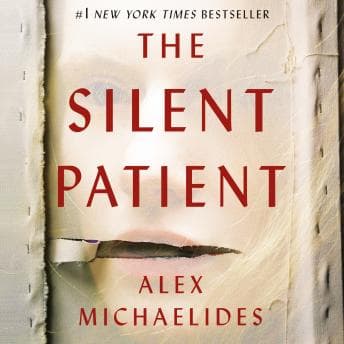
Look, I'll be honest - I went into this expecting to be annoyed. Psychological thrillers written by non-psychologists usually make me want to throw things. (Don't tell my students I said that.) But Alex Michaelides? He actually did his homework. Theo Faber, our criminal psychotherapist protagonist, exhibits classic countertransference patterns that would make any supervisor nervous. His obsession with Alicia isn't just plot convenience - it's a textbook case of a therapist projecting his own unresolved trauma onto a patient.
And Jack Hawkins' narration captures this perfectly. His voice has this quality - smooth on the surface, but with something unsettling underneath. When Theo describes his sessions with Alicia, Hawkins delivers it with just enough professional detachment that you almost miss the warning signs. Almost. I found myself thinking: this is exactly how a therapist losing his boundaries would sound. Controlled. Reasonable. Completely convinced he's the exception to every ethical rule he's breaking.
Louise Brealey handles Alicia's perspective through her diary entries, and the contrast is striking. Where Hawkins is measured and analytical, Brealey brings this raw emotional vulnerability that makes Alicia feel genuinely human rather than just a mysterious puzzle to solve. The research actually shows that we're more likely to empathize with characters whose inner lives we access directly - and Michaelides uses this dual narration structure brilliantly.
What Makes This Thriller Different
I've listened to approximately a thousand psychological thrillers at this point. (Okay, maybe not a thousand. But close.) Most of them treat psychology like window dressing - throw in some trauma, mention therapy once, call it a day. The Silent Patient does something smarter. It actually engages with the therapeutic process as a mechanism for uncovering truth.
The sessions between Theo and Alicia are genuinely compelling because they feel like real clinical work. The silences. The small breakthroughs. The way Alicia's art becomes a form of communication when words fail her. This is a fascinating case study in how humans find ways to express the inexpressible.
That said - and I need to be fair here - some of Theo's investigative methods would get any real therapist's license revoked faster than you can say "boundary violation." There were moments I was muttering "absolutely not" while chopping vegetables. (Yes, I listen while cooking. My dal has heard some things.) But psychologically, his behavior tracks with someone whose professional identity has become dangerously entangled with a patient. The book knows he's crossing lines. It wants you to notice.
The Twist (No Spoilers, I Promise)
I figured out part of it around hour six. Not all of it - Michaelides is too clever for that - but enough that I felt smug for approximately twenty minutes before the actual ending demolished me. And here's what I'll say: the twist isn't just surprising. It's psychologically inevitable. Looking back, every piece was there. Every character motivation suddenly makes perfect sense.
The narrators handle the revelation beautifully. Hawkins' delivery in those final chapters shifts just enough - a slight change in rhythm, a different weight to certain words - that you can actually hear the mask slipping. I had to rewind and listen to earlier sections just to catch what I'd missed. Turns out I'd missed a lot.
Who Should Listen
If you're someone who needs your thriller protagonists to be likeable, this might not be your book. Theo is compelling but deeply flawed. Alicia is sympathetic but unknowable. The supporting characters at the Grove psychiatric facility range from well-meaning to genuinely awful, and the book doesn't always make clear distinctions.
But if you're interested in character psychology - if you want a thriller that treats mental health with actual nuance rather than as a plot device - this is worth your eight and a half hours. The dual narration keeps things moving, and the mystery structure means you're never bored even during the slower therapeutic sections.
I listened to most of it during my morning runs and evening cooking sessions. Fair warning: it's not great for falling asleep. Too many "wait, what did he just say?" moments that'll have you rewinding at 11 PM when you should be unconscious.
Final Thoughts
The Silent Patient isn't perfect. Some of the secondary characters feel underdeveloped, and there's a subplot involving Theo's marriage that occasionally drags. But as a psychological thriller that actually understands psychology? It's surprisingly good. Hawkins and Brealey deliver performances that elevate already strong material, and the twist ending is the kind that rewards rather than punishes attentive listeners.
My therapist would probably have thoughts about how much I enjoyed analyzing Theo's ethical failures. But that's between me and her.