
Forty-Four Minutes of Military Fiction
Look, I was grading papers on a Tuesday night - the usual stack of half-hearted essays about The Great Gatsby that all somehow manage to miss the point about the green light - when I decided I needed something short to get me through. Forty-four minutes. That's barely longer than my commute. How much damage could it do?
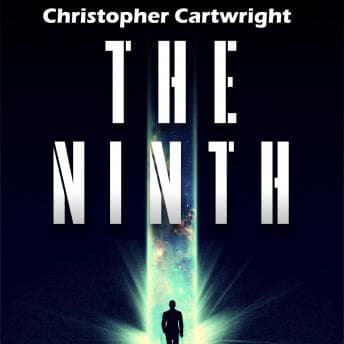
Here's the thing about Christopher Cartwright's Ninth: it's essentially a short story masquerading as an audiobook. And I don't mean that as a criticism, exactly. It's a tight little military thriller setup - Navy SEAL Omega unit, ancient stronghold, mysterious ninth man who doesn't belong. The premise is solid. Classic "stranger among us" tension that goes back to, well, pretty much every war story ever told. (My students would roll their eyes at that comparison. They can deal.)
But at 44 minutes, you're getting a slice of something rather than a full meal. It's like ordering an appetizer and being told that's dinner.
David Gilmore Behind the Mic
Now, David Gilmore. I couldn't find much about him online beyond this performance, but based on what I heard? He's competent. Engaging enough to keep the story moving. His voice has that steady, no-nonsense quality you want for military fiction - he's not trying to do too much with it, which is honestly the right call for material this lean.
That said, the pacing felt rushed in spots. When you've only got 44 minutes to work with, every beat matters, and there were moments where I wanted him to slow down, let the tension build. The author chose those words for a reason, and some of them deserved more room to breathe. The character differentiation was serviceable - you could tell who was talking - but with an 8-man SEAL team plus our mysterious ninth, there wasn't enough time to really distinguish anyone beyond their function in the plot.
This is where short-form audiobooks get tricky. A narrator can only do so much when the source material is essentially a prologue.
What's Actually Here
The writing itself is workmanlike military thriller prose. Cartwright knows his gear, knows his tactical details, knows how to set up a scenario. If you've read Tom Clancy or Vince Flynn, you'll recognize the DNA. The "ancient stronghold that had shown little military significance - until now" is doing a lot of heavy lifting in that description, promising mysteries the runtime can't really deliver on.
And that's my fundamental issue. Ninth feels like the opening chapter of something longer. The setup is intriguing - who is this ninth man? Why doesn't he belong? What's so important about this stronghold? But by the time you're getting invested, it's over. You're left wanting more, which I suppose is the point if this is meant to hook you into a series, but as a standalone listening experience? It's a tease.
I finished it before I'd gotten through half my stack of essays. Went back to grading feeling like I'd started a conversation that got interrupted.
Who This Is For
If you're looking for something to fill a short commute or a quick workout, this'll do the job. It's competently executed military fiction that moves fast and doesn't ask much of you. Honestly, for 44 minutes, that's not nothing.
But if you want character development, if you want to understand why these men do what they do, if you want the kind of moral complexity that makes the best military fiction actually resonate - Hemingway's A Farewell to Arms, Tim O'Brien's The Things They Carried - you're not going to find it here. This is plot delivery, pure and simple.
My students would probably like it. It's short, it's action-focused, and it doesn't require them to think too hard about subtext. (Don't tell them I said that.)
The Verdict
Worth pausing the faculty meeting for? Eh. It's fine. David Gilmore does what he can with limited material, and Cartwright knows how to construct a military scenario. But at 44 minutes, you're essentially paying for a short story, and I'm not sure the experience justifies seeking this out specifically.
If you're already a Cartwright fan or you're desperate for something quick and tactical, go for it. Otherwise, I'd say sample first and see if the setup hooks you enough to care about finding out what happens next - assuming there's a sequel that actually delivers on the promise.
Now if you'll excuse me, I have seventeen more essays about that damn green light to get through.