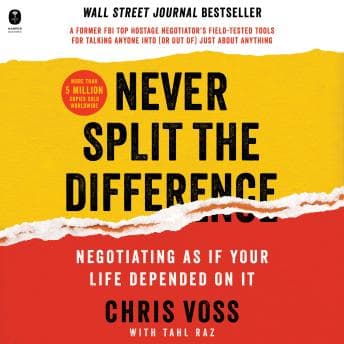

The One Business Book That Actually Delivers
Okay, so I'll admit it - I started this one at 1.75x speed because, you know, business book. Every startup founder's favorite genre where they take one decent idea and stretch it into 300 pages of padding. I was ready to zone out somewhere around chapter three like I always do.
I finished it at 1.25x. And then I immediately texted Kevin three different negotiation tactics to try on his manager.
TL;DR: Worth your commute. This is basically hostage negotiation tactics but for salary reviews, vendor contracts, and arguing with your landlord. The ROI on this audiobook is genuinely high - I've already used the "mirroring" technique twice in sprint planning meetings.
Why This Isn't Just Another Blog Post Stretched Into a Book
Look, here's the thing. Chris Voss was the FBI's lead international kidnapping negotiator. Not "consultant who read some papers about negotiation" - actual hostage situations with actual lives on the line. And it shows. Every chapter opens with some wild story about a bank robbery or a kidnapping in Haiti or whatever, and then he breaks down exactly what psychological principle he was exploiting.
The stories are genuinely gripping. I missed my stop once - which, if you know the Caltrain schedule, you know that's a 30-minute mistake. But I was in the middle of this whole thing about how he talked down a guy holding hostages in a Chase Manhattan bank, and I just... couldn't pause it.
What I really appreciate is that Voss doesn't just give you theory. He gives you actual scripts. Like, word-for-word phrases you can use. "How am I supposed to do that?" is apparently magic for getting people to negotiate against themselves. "That's right" versus "you're right" - totally different psychological impacts. I'm an engineer, I like concrete implementations. This book delivers them.
Michael Kramer Does the Heavy Lifting
So Michael Kramer narrates this, and honestly? He's perfect for it. He's got this authoritative, slightly intense delivery that makes you feel like you're getting briefed before a mission. Which, given the subject matter, totally works.
His pacing is deliberate - not slow, just... measured. Like he's making sure you catch every tactical detail. For a book that's essentially a manual, that matters. I wasn't constantly rewinding because I zoned out during a key concept (looking at you, every Malcolm Gladwell audiobook I've ever attempted).
The one thing I'll say is that when Kramer voices the "other people" in Voss's stories - the hostage takers, the difficult negotiation partners - they all kind of sound similar. It's not a huge deal because this isn't a novel with a cast of characters, but if you're expecting distinct voices for every anecdote, you won't get that. It's more like Kramer is telling you about these people than performing them. Which is fine. It's a business book.
(Side note: I couldn't find much about whether there's a version where Voss narrates it himself. If there is, I'd be curious to compare. But Kramer does a solid job making you feel like you're learning from a pro.)
The Stuff That Actually Stuck
I finished this in about 4 commutes, and I've been thinking about it for weeks. A few things that really landed:
Tactical empathy - basically, acknowledging someone's feelings without agreeing with their position. I used this in a code review last week when a junior engineer was getting defensive about feedback. "It seems like you put a lot of thought into this architecture" before explaining why we needed to change it. Night and day difference in how that conversation went.
The late-night FM DJ voice - Voss talks about using a calm, slow, downward-inflecting tone to de-escalate. I tried this on a vendor call that was going sideways. Did it work? Honestly, maybe? Hard to tell. But I felt more in control, which counts for something.
"No" is not the end - this whole reframe about how getting someone to say "no" actually makes them feel safe and in control. It's counterintuitive but it makes sense when he explains it. I'm still practicing this one.
Who Should Skip This
If you want academic theory about negotiation, this isn't it. Voss is dismissive of the traditional "Getting to Yes" approach (he literally calls it out by name), and some people find that off-putting. He's confident to the point of cocky sometimes.
Also, if you're looking for negotiation advice for like, international diplomacy or complex multi-party situations, this is pretty focused on one-on-one interactions. It's tactical, not strategic.
And fair warning - some of the FBI stories get intense. There's discussion of violence, people dying, high-stakes situations. It's not gratuitous, but if you're listening at 6AM half-asleep, some of it might jolt you awake more than you wanted.
The Verdict
Perfect for: train, gym, chores. Skip for: bedtime (too engaging, you'll stay up).
This is one of the rare business books where I didn't feel like my time was wasted. Eight hours, concrete tactics, good stories, solid narration. I've already recommended it to three coworkers - one of whom used the techniques to negotiate a 15% raise, so. Yeah.
The science actually holds up, too. Voss references behavioral economics and psychology research throughout, and when I spot-checked a few claims, they checked out. He's not just making stuff up.
If you negotiate anything - salary, contracts, who's doing the dishes tonight - this is worth your time. I'm genuinely annoyed I didn't listen to it before my last performance review cycle.