
A Victorian Lecture I Didn't Know I Needed
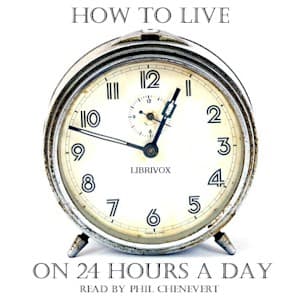
So I'm chopping onions for a dal that's way too ambitious for a Tuesday night, and Arnold Bennett—a man who's been dead for nearly a century—is basically calling me out through my kitchen speakers. "Which of us lives on twenty-four hours a day?" he asks. And I'm standing there, knife in hand, genuinely feeling attacked by a guy from 1910.
Here's the thing about this book: it's barely an hour and a half long, and it hit me harder than most 300-page productivity bibles I've slogged through. Bennett wrote this in the Edwardian era, aimed at what he calls "the man in the street"—specifically the office worker commuting to London, earning a modest salary, feeling like life is slipping through his fingers. The protagonist exhibits classic existential drift. That gnawing sense that you're not really living, just... existing. Muddling through. (My therapist would have thoughts about this character. And by "this character," I mean me.)
What makes Bennett compelling is his brutal honesty. He's not selling you a system or a planner or a morning routine involving ice baths. He's just... asking uncomfortable questions. Why do you treat your evenings like garbage time? Why do you assume you'll "have more time later" when—spoiler—you won't? We have, and have always had, all the time there is. That line stuck with me through three morning jogs this week.
Phil Chenevert's Steady Hand
I couldn't find a ton about Phil Chenevert online, but based on this performance, he's got a voice that works well for this kind of material. Pleasant, clear, unhurried. He reads Bennett's slightly formal Victorian prose without making it feel stuffy or distant—which is harder than it sounds. The pacing is deliberate, maybe even a touch slow in spots, but honestly? It fits. This isn't a book you want rushed at you. Bennett's ideas need room to breathe, and Chenevert gives them that.
The neutral Canadian accent helps too. No distracting affectations, no dramatic flourishes. Just a straightforward reading that lets the text do its work. For a non-fiction essay like this, that's exactly what you want.
The Psychology of Time Anxiety
Okay, so here's where I get nerdy. This is a fascinating case study in what we'd now call time anxiety—that pervasive modern feeling that you're wasting your life, that everyone else is more productive, that you should be doing more. Bennett was writing about this over a hundred years ago, which tells you something about human nature. We've always felt this way. The research actually shows that perceived time scarcity is often worse than actual time scarcity. We have more leisure time than our grandparents did, statistically. And yet.
Bennett's solution isn't about cramming more into your day. It's about being intentional. He suggests carving out 90 minutes, three evenings a week, for serious mental cultivation. Reading. Thinking. Engaging with ideas that matter to you. Not scrolling. Not "relaxing" in ways that leave you feeling emptier than before. (I found myself asking: why does he assume we'll default to wasting time? And then I remembered my screen time report from last week. Point taken, Arnold.)
The book does have its limitations. It's very much of its era—Bennett assumes his reader is a man with a wife who handles domestic duties, which... yeah. And some of his specific suggestions (studying Marcus Aurelius on the train!) feel a bit prescriptive. But the underlying psychology? Still sharp. Still relevant. Still uncomfortably accurate.
Fair Warning
Look, this isn't going to give you a step-by-step productivity system. If you want apps and hacks and optimization strategies, this will frustrate you. It's more of a philosophical poke in the ribs. A gentle (okay, sometimes not so gentle) reminder that time is the one resource you cannot manufacture more of, and maybe you should stop treating your hours like they're infinite.
Also, at under two hours, it's almost too short to fully develop some ideas. Bennett gestures at concepts—like how to actually concentrate, how to sustain mental effort—without going deep. It's more manifesto than manual. Which can leave you wanting more.
Who Should Listen
This is perfect for anyone who's ever said "I don't have time for that" while somehow finding three hours to watch reality TV. (No judgment. I've been there.) It's great for commutes—short enough to finish in a few trips—or for chores when you want something that makes you think without demanding intense focus.
If you're already a productivity junkie with seventeen systems in place, this might feel too basic. But if you're someone who's vaguely dissatisfied with how you spend your days and can't quite articulate why? Bennett might just name the problem for you.
I finished it while the dal was simmering, and I immediately went and sat down with a book instead of my phone. Small victory. But that's kind of the point, isn't it? The small victories, accumulated.
Bennett would approve. I think.