
A Quiet Evening with the Old Stories
I put this on during a late grading session - you know the kind, red pen in hand, stack of sophomore essays about symbolism in The Great Gatsby that mostly miss the point. Greek myths felt like the right antidote. Something familiar, something foundational. And at just under two hours, it was exactly the length of my remaining sanity.
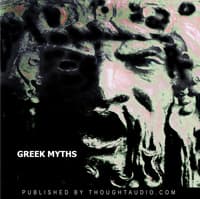
Here's the thing about James Baldwin's Greek Myths - and no, not that James Baldwin, this is a different writer entirely, one who worked in the late 1800s adapting classical stories for younger readers. His retellings are stripped down, accessible, almost conversational in their simplicity. Which is both the strength and the limitation here.
What Baldwin Gets Right
Baldwin understood something that a lot of modern myth retellings forget: these stories work because they're stories, not academic exercises. He doesn't bog you down with genealogies or footnotes about which version of Persephone's abduction is most historically accurate. He just tells you the tale. Prometheus steals fire. Pandora opens the box. Theseus enters the labyrinth.
There's a directness to his prose that actually translates beautifully to audio. The sentences are clean, the imagery vivid without being overwrought. When I teach mythology units, I'm constantly fighting against students who think these stories are dusty museum pieces. Baldwin's approach - even from over a century ago - has this weird timelessness. The myths feel alive.
And honestly? At under two hours, this is the perfect gateway drug for someone who's curious about Greek mythology but intimidated by Edith Hamilton or Robert Graves. My students would actually finish this one. (Don't tell them I said that - they'll think I've gone soft on assigned reading.)
The Narration Situation
So here's where I have to be honest with you. I couldn't find much about Michael Scott as a narrator online - and no, it's not that Michael Scott either, before you make the joke. The performance here is... serviceable. Competent. He reads clearly, the pacing is measured, the audio quality is clean enough.
But - and this is a significant but - there's something missing. These myths are full of passion, betrayal, divine rage, impossible love. They deserve a narrator who leans into that drama. Scott's delivery is a bit too even, too controlled. When Zeus hurls thunderbolts, I want to feel the thunder. When Orpheus loses Eurydice, I want that catch in the voice, that moment of devastation.
Instead, it all comes out at roughly the same emotional register. Pleasant, yes. Professional, certainly. But transformative? Not quite.
This is why I always tell people: great narration is performance art. A narrator doesn't just read words - they interpret them, they breathe life into them. Scott reads the words. He doesn't quite inhabit them.
Who This Is Actually For
Look, I'm being a bit hard on it because I'm a snob about these things. (Twenty years of teaching literature will do that to you.) For what it is - a brief, accessible introduction to Greek mythology - this works fine. If you're:
- New to mythology and want something short
- Looking for background listening during chores or a commute
- Trying to remember which god did what before your kid asks you
- Wanting a gentle refresher without committing to a 20-hour epic
Then this will serve you well. The brevity is actually a feature, not a bug.
But if you're looking for the definitive audio experience of Greek myths? If you want narration that makes you stop what you're doing and just listen? You might want to explore other options. Robert Graves' The Greek Myths with Simon Callow narrating is a richer, deeper dive. Stephen Fry's Mythos brings genuine theatrical energy to the material. Those are the ones I recommend to my podcast listeners (all 47 of them, bless their hearts).
The Verdict
This is mythology as comfort food. It's the equivalent of those illustrated mythology books you read as a kid - pleasant, familiar, undemanding. Baldwin's text holds up surprisingly well for something written in the 1890s. The narration does its job without distinction.
I finished it in one grading session. The essays still had problems. But I remembered why I love these stories - even in a version that doesn't quite do them justice. There's something about Icarus flying too close to the sun, about Sisyphus and his boulder, about Prometheus paying eternally for giving humanity fire. These myths endure because they're true, even when they're not factual.
Worth a listen if you're curious and short on time. Just know that the definitive Greek mythology audiobook experience is still out there waiting for you. This one's the appetizer, not the feast.