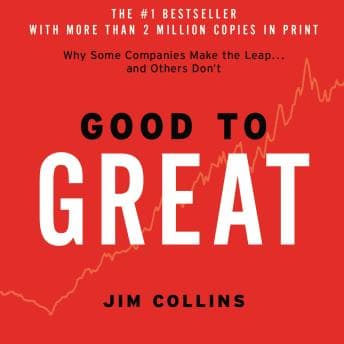

Look, I'll give you the bottom line upfront: Good to Great is one of maybe five business books I'd actually recommend without caveats. And I've listened to hundreds. Most of them at 2.0x speed while doing dishes, half-paying attention because the content didn't deserve full attention anyway.
This one got 1.5x. That's basically a standing ovation from me.
I first listened to this years ago when I was still at McKinsey, back when we'd quote the Hedgehog Concept in client decks like it was scripture. Revisiting it now, as someone who's watched dozens of startups flame out doing the exact opposite of everything Collins preaches? It hits different. Harder. More personal.
The Research That Actually Holds Up
Here's what separates Collins from the usual business book crowd: the man did the work. Five years. 28 companies. A research team that actually controlled for variables instead of just cherry-picking success stories and reverse-engineering narratives. You know how many business books I've read that basically say "Here's what successful people do, therefore do this"? That's survivorship bias dressed up in a nice suit. Collins actually compared the great companies against similar companies that didn't make the leap. That's... that's just good methodology. (Yes, I'm getting excited about methodology. This is who I am now.)
The Level 5 Leadership concept alone is worth the listen. The idea that the best leaders aren't the charismatic visionaries but the humble, almost invisible executives who channel their ego into the company rather than themselves? I've seen this play out. The flashy CEO who's always on podcasts and magazine covers? Usually running the company into the ground while building their personal brand. The quiet operator who nobody outside the industry knows? That's often where the real magic happens.
My parents ran their dry cleaning business for 30 years. Never gave a TED talk. Never wrote a LinkedIn post. Just showed up, did the work, reinvested in the business, treated employees like family. Level 5 Leadership before Collins gave it a name.
Collins Behind the Mic
So here's the thing about author-narrated business books - they're usually a disaster. Authors are not voice actors. They read their own words like they're discovering them for the first time, which... they're not. It's weird.
Collins is different. The guy is genuinely enthusiastic about his research, and it comes through. Some listeners find it too much - I've seen reviews calling it "fake" or "unbearable." I get it. There's a certain earnestness that can grate if you're not in the mood. But honestly? I'd rather have someone who actually cares about their material than a bored narrator sleepwalking through concepts they don't understand.
The audiobook also includes updated commentary and FAQ sections that aren't in the original book. Collins addressing common criticisms, clarifying concepts, answering questions that came up over the years. That's added value you don't get from the print version. For a 10-hour listen, those extras help justify the time investment.
That said - and Jenny would say I'm being harsh, Jenny is right - the narration does get repetitive. Collins has a habit of restating concepts multiple times, which works great in a business presentation but can drag in audio format. By hour seven, I was back to 2.0x. The core insights are front-loaded; the back half is reinforcement.
What Actually Sticks
The Hedgehog Concept - finding the intersection of what you're passionate about, what you can be best at, and what drives your economic engine - sounds simple. Almost too simple. But I've watched three different startups fail because they couldn't answer these questions honestly. They were passionate about something they couldn't be best at. Or they could be best at something that had no economic engine. The framework forces clarity.
The Flywheel versus Doom Loop distinction is equally brutal in its accuracy. Good-to-great companies build momentum gradually, consistently pushing in one direction until breakthrough happens. Comparison companies lurch from strategy to strategy, restructuring constantly, never building momentum. I've consulted for both types. The Doom Loop companies always think they're being "agile" and "responsive to market conditions." They're not. They're just lost.
Skip to the chapters on these two concepts if you're short on time. Thank me later.
Who Should Listen
Best for: Anyone in a leadership role who's tired of business books that are basically motivational posters stretched to 300 pages. Managers who want frameworks, not platitudes. Founders who need to hear that slow, disciplined growth beats flashy pivots.
Skip if: You need constant entertainment. This is dense, research-heavy content. It rewards attention but doesn't demand it with thriller pacing. Also skip if you're allergic to enthusiasm - Collins really does sound like he's excited about corporate research, and that's either charming or insufferable depending on your tolerance.
The Verdict
The key takeaway is worth the listen. The other 4 hours of reinforcement? Not so much. But unlike most business books where I'd tell you to just read the summary, Good to Great actually benefits from the full context. The examples, the comparisons, the methodology - it builds a case rather than just asserting conclusions.
Is some of it dated? Sure. Some of the "great" companies have since stumbled. But the principles hold. The research approach holds. And Collins' genuine passion for the work, even if it occasionally tips into "corporate motivational speaker" territory, makes this one of the rare business audiobooks that respects your time while still taking almost 10 hours of it.
Finally, a business book that earns its length. Mostly.