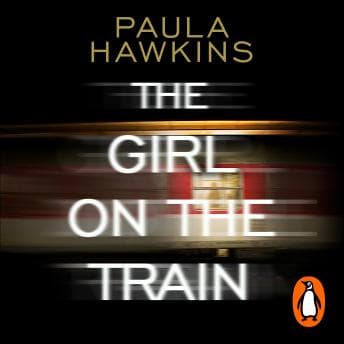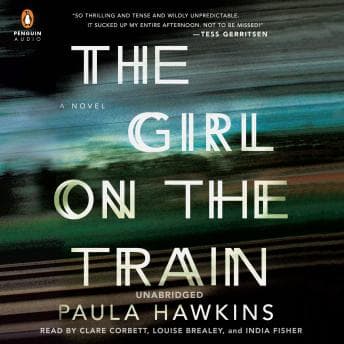

Look, I know what you're thinking. The Girl on the Train? That book everyone was obsessing over back in 2015? The one that got compared to Gone Girl so many times the comparison became its own cliché? Yeah. That one.
I finally got around to it. Denise had been telling me for years that I needed to listen to it, and I kept waving her off because - honestly - I'm a snob. I teach Faulkner and Woolf. I have opinions about stream of consciousness. I wasn't about to admit that a domestic thriller might actually have something interesting going on with its narrative structure. (Spoiler: it does.)
I started it on a Saturday morning walk along the lakefront. By Sunday evening, I'd finished it while "grading papers" - and by grading papers, I mean I had a red pen in my hand and student essays in front of me and absolutely zero memory of marking anything.
The Voices That Make It Work
Here's the thing about unreliable narrators - and this is something I tell my AP Lit students every year - they only work if you can hear the cracks. The hesitations. The places where what someone says doesn't quite match how they say it.
This audiobook has three narrators: Clare Corbett, India Fisher, and Louise Brealey. Each one takes a different woman's perspective - Rachel, Anna, and Megan. And what Hawkins does with the structure is genuinely clever. These women's lives are tangled together in ways they don't fully understand, and having three distinct voices means you're constantly triangulating. Whose version is true? Who's lying? Who's lying to themselves?
Clare Corbett handles Rachel, the alcoholic protagonist who watches strangers from her train window and constructs fantasies about their lives. Corbett's performance is... uncomfortable. In the best way. She captures that particular quality of someone who knows they're a mess but can't stop narrating their own disaster. There's a rawness there that made me genuinely squirm. Rachel is not a likeable character - she's desperate and delusional and makes terrible choices - but Corbett makes her human. You understand her even when you want to shake her.
India Fisher takes Anna, the "other woman" who became the wife, and there's this brittle defensiveness in her voice that's perfect. Anna is constantly justifying herself, and Fisher lets you hear the effort that takes. Louise Brealey's Megan is more elusive - dreamy, dissatisfied, hiding things. The three performances together create this kaleidoscope effect where you're never quite sure whose reality is the real one.
What Hawkins Actually Gets Right
Okay, so here's where the English teacher in me has to show up. (Sorry not sorry.)
The comparison to Gone Girl isn't wrong, but it's incomplete. Both books play with unreliable narration, yes. But Hawkins is doing something different with memory and perception. Rachel's alcoholism means there are literal gaps in her story - blackout nights she can't account for. And the audiobook format makes this visceral in a way reading might not. When Corbett's voice trails off, when there's that slight hesitation before Rachel admits she doesn't remember what happened... you feel the terror of not being able to trust your own mind.
This reminds me of what Hemingway said about the iceberg theory - what's left out is as important as what's there. Hawkins understands that. The gaps aren't just plot devices; they're the whole point. We're all constructing narratives about our lives, filling in blanks, making ourselves the heroes of stories that might look very different from another angle.
My students would probably hate this book. Too much suburban angst, not enough explosions. But there's real craft here in how the timelines weave together, how each narrator's section adds a piece while taking something else away.
The Listening Experience
At just under eleven hours, this is a solid weekend listen. I wouldn't recommend speeding it up - the pacing is deliberate, and rushing through would flatten the tension that builds in those quiet moments between revelations.
The production quality is clean. No weird audio artifacts, no jarring transitions between narrators. It's a professional job, which sounds like faint praise but honestly matters when you're listening for hours at a time.
Fair warning: this is not a comfortable listen. Rachel's sections in particular can be hard to sit with. Her self-destruction is detailed and unflinching. If you're looking for escapism, this isn't it. But if you want something that gets under your skin and makes you think about how we construct identity through narrative - and how easily those constructions can collapse - it's worth the discomfort.
Who Should Listen
If you loved Gone Girl, obviously. But also if you're interested in how contemporary fiction handles perspective and reliability. This would actually make a decent pairing with something like The Sound and the Fury - both books are fundamentally about how the stories we tell ourselves shape (and distort) reality. Though maybe don't tell my department head I'm recommending Paula Hawkins alongside Faulkner. (Dr. Patterson, if you're reading this: I stand by it.)
Skip it if you need likeable protagonists. None of these women are particularly sympathetic. They're messy and flawed and sometimes cruel. That's the point, but it's not for everyone.
The movie adaptation exists, and Emily Blunt is fine in it, but you lose the interiority that makes the book work. This is a story that lives in the heads of its characters, and the audiobook format preserves that in a way film can't.
Final Thoughts
I went in expecting a beach read. I got something more interesting - a meditation on memory, identity, and the stories we tell ourselves to survive. The three narrators elevate what could have been a straightforward thriller into something genuinely literary.
Worth pausing the faculty meeting for. Definitely.