
A Story That Haunted My Commute
I started this one on a Tuesday morning walk along the lakefront. By Thursday, I was sitting in my car in the school parking lot, fifteen minutes early, refusing to go inside until I finished a chapter. That's the kind of book this is.
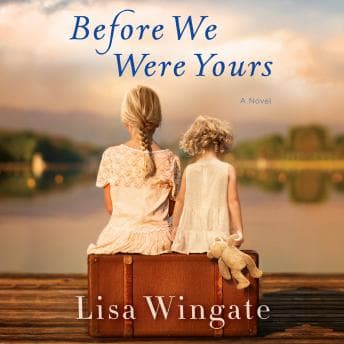
Look, I'll be honest - when someone describes a book as a "blockbuster hit" with "over two million copies sold," my pretentious English teacher brain usually checks out. (Don't tell my book club I said that.) But Lisa Wingate does something genuinely impressive here. She takes a piece of American history that should be taught in every high school - Georgia Tann's child trafficking operation through the Tennessee Children's Home Society - and makes it breathe. This isn't historical fiction that reads like a Wikipedia entry dressed up with dialogue. This is the real thing.
The dual timeline structure could've been a disaster. Present-day privileged Avery Stafford discovering family secrets while we flash back to 1939 Memphis and twelve-year-old Rill Foss? That's a recipe for whiplash in lesser hands. But Wingate earns every transition.
Why the Dual Narration Actually Works
Catherine Taber and Emily Rankin split the narration duties, and here's where I need to give credit where it's due - this could've gone sideways fast. Two narrators means two interpretive lenses, two pacing choices, two emotional registers. When it works, it's seamless. When it doesn't, you spend half your listening time adjusting.
This one works. Mostly.
Taber handles Rill's sections with this quiet intensity that just - it gets under your skin. The Mississippi River shantyboat life, the terror of being ripped from everything familiar, the fierce protectiveness of a twelve-year-old suddenly responsible for four younger siblings. She doesn't oversell the trauma, which is exactly right. Wingate's prose is doing the heavy lifting; Taber trusts it.
Rankin's Avery sections are competent, though I'll admit I found myself slightly less invested. (And honestly, that might be the writing more than the performance - Avery's present-day privilege feels a bit... thin compared to Rill's visceral struggle.) The Southern accents are consistent without veering into caricature, which is harder than it sounds. My students would probably find the pacing slow in spots. They're not wrong, exactly. There are middle sections where the momentum dips, where the chapters stretch longer than they need to.
But here's what I kept thinking about: the pause is punctuation. Taber especially understands this. The moments of silence between Rill's realizations, the breath before something terrible happens - that's performance, not just reading.
The Weight of What's Real
This reminds me of what Toni Morrison said about the function of literature - that it should "make you see something you've never seen before." I knew nothing about Georgia Tann before this book. Nothing about the estimated 5,000 children she trafficked. Nothing about how she targeted poor families, river people, anyone society deemed "unworthy" of keeping their own children.
Wingate doesn't let you look away. But she also doesn't wallow. There's a restraint here that I deeply appreciated - the horror is in the implications, in the small moments. A child's name being changed. Siblings separated. The slow erosion of identity.
I found myself pausing the audiobook more than usual. Not because I was bored - because I needed to process. That's a particular kind of reading experience, and it translates differently in audio. You can't skim past the hard parts. The narrators make you sit with them.
If you loved The Nightingale or The Alice Network, this belongs on your list. Same emotional territory - historical injustice illuminated through personal stories - but distinctly American in its shame.
Fair Warning
At fourteen and a half hours, this is a commitment. The pacing does drag in the middle third, particularly in Avery's timeline. There's a romance subplot that feels obligatory rather than organic. And some of the present-day revelations are telegraphed pretty heavily - my students would call them "predictable," and they wouldn't be wrong.
Also: if you're listening while doing something that requires emotional stability - grading papers, for instance - maybe don't. I had to explain to a student why I was visibly upset while marking their essay on The Great Gatsby. (I blamed Fitzgerald. He'd understand.)
The dual narration, while generally effective, occasionally creates a slight disconnect when transitioning between timelines. It's not jarring, exactly, but you feel the seams.
The Verdict
This is why we still read historical fiction. Not for the facts - you can get those from a documentary. But for the felt experience of history, the way literature makes the past present tense.
Wingate has done something important here. She's taken a chapter of American history that was deliberately buried - wealthy families who adopted Tann's stolen children had every reason to keep quiet - and brought it into the light. The audiobook format serves this well. There's something about hearing these children's voices, even filtered through adult narrators, that hits differently than reading silently.
My students would hate this. Too slow, too emotional, too much historical context. I love it. Worth pausing the faculty meeting for. (Sorry again, Principal Martinez.)
Denise and I finished it together on a Sunday walk. We didn't talk for about ten minutes afterward. That's the highest compliment I can give.