
The Setup
Look, I'll be honest - I started this audiobook during a particularly brutal faculty meeting about standardized testing benchmarks. (Sorry, Principal Martinez, but Einstein seemed more pressing than our Q3 metrics.) And here's the thing: listening to the man who fundamentally rewrote our understanding of space and time while sitting in a fluorescent-lit conference room where time itself seemed to stop? There's a poetry to that.
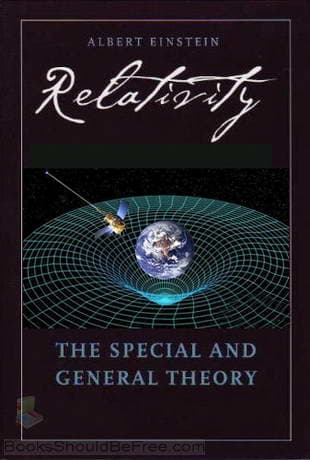
Einstein wrote this book in 1916 for people like me - curious minds without the mathematical chops to follow the actual equations. He says as much in the preface. The prose deserves to be savored, even when it's wrestling with concepts that make your brain feel like taffy being stretched across the cosmos.
What Einstein Gets Right (And What Audio Gets Wrong)
This is Einstein explaining Einstein. Not a popularizer, not a science journalist with a deadline - the actual guy who looked at Newton's perfectly good universe and said "but what if trains moving at the speed of light?" There's something genuinely thrilling about hearing his thought experiments in his own words. The famous train-and-lightning scenario. The elevator falling in space. The way he builds from simple observations to universe-shattering conclusions.
The writing is surprisingly accessible. Not easy - let's be clear - but Einstein had a gift for analogy that most physicists would kill for. He understood that pause is punctuation. His sentences unfold methodically, each one building on the last like a careful proof. If you loved reading the original works of Darwin or Galileo, this is their spiritual successor in physics.
But here's where I have to be real with you: this particular audiobook has a significant problem, and the publisher admits it right in the description. The equations don't translate to audio. Variables get mangled. The numeral "one" becomes the letter "I." For a book where the math is the point - where E=mc² isn't just a bumper sticker but a derivation you're meant to follow - losing the equations is like listening to a symphony with the brass section muted.
The narration itself is credited to "Various," which is never a great sign. I couldn't find much detail about the specific narrators online, but the delivery I heard was competent without being memorable. Clear enough. Professional enough. But this is Einstein! This is one of the most important scientific texts of the twentieth century! It deserves narration that captures the wonder, the intellectual excitement, the sheer audacity of rewriting physics. What we get is... fine. Just fine.
Who Should Actually Listen
Here's my honest take: this audiobook works as an introduction to Einstein's thinking, not as a serious study of relativity. If you want to understand the philosophical implications - why absolute time doesn't exist, what it means that space itself can curve - the audio format actually helps. Einstein's prose flows beautifully when spoken aloud, and some concepts are easier to grasp when you're not staring at the page trying to parse the syntax.
But if you want to actually follow the physics? Read the book. Get a physical copy with the equations intact. Maybe grab a companion guide. The math isn't decoration - it's the argument.
I found myself listening at 1.0x, because the author chose those words and I choose to hear them properly. (My students think I'm ancient for this take. They're not wrong.) Einstein's sentences reward patience. Rush through and you'll miss the elegance of how he connects seemingly unrelated observations.
The runtime is only 3 hours and 41 minutes, which feels right. This isn't a book you marathon - it's one you listen to in chunks, letting each section settle before moving on. I spread it across a week of lakefront walks with Denise, pausing frequently to stare at the water and think about how light bends around massive objects.
The Verdict
This reminds me of what Hemingway said about writing - that the dignity of movement of an iceberg is due to only one-eighth of it being above water. Einstein's popular writing is that visible eighth. The depth is there, but you're only seeing the surface in this format.
If you've never read Einstein's original work and you're curious about relativity beyond the pop-science summaries, this audiobook will give you a genuine taste of his thinking. The man could write. The ideas still feel revolutionary a century later. And there's something valuable about hearing these concepts explained by the person who discovered them.
But the technical limitations are real. The equation problem isn't minor - it's fundamental to what this book is trying to do. And the narration, while serviceable, doesn't elevate the material the way truly great science audiobooks can. (Compare this to a well-narrated Hawking or Sagan and you'll hear the difference immediately.)
My recommendation: sample the first chapter to see if Einstein's style clicks with you. If it does, consider getting the print version alongside the audio. Use the audiobook for the philosophy, the wonder, the big-picture thinking. Use the book for the actual physics.
My students would probably zone out. But for those of us who still believe in wrestling with primary sources, in hearing great minds in their own words - even imperfectly rendered - there's value here. Just go in knowing what you're getting. And what you're not.