
The Psychology of Chill (Or: Why My Cortisol Levels Needed This)
Okay, let's be real for a second. I usually spend my evenings dissecting the twisted motivations of fictional murderers or trying to explain to my mother why I can't just "meet a nice boy" at the grocery store. My baseline state is what my therapist gently calls "high-functioning anxiety" and what I call "academic rigor."
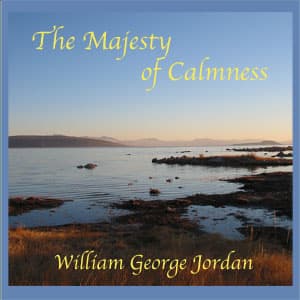
So, stumbling onto The Majesty of Calmness was... well, necessary. I listened to this while aggressively chopping vegetables for a curry I definitely made too spicy. (Freud would say I was sublimating anger; I say I just like chili peppers.)
Here's the thing about William George Jordan. The guy was writing in the early 1900s. You'd think his advice would be outdated—like using leeches for a headache or thinking hysteria is a wandering uterus. But psychologically? It tracks. Surprisingly well.
The "Royal" Vibe Check
The title sounds a bit grandiose, right? The Majesty of Calmness. Like we're all going to put on crowns and sit very still. But once you get past the vintage phrasing, Jordan is basically describing high-level emotional regulation.
He frames calmness not as weakness or passivity—which is often how my students interpret it—but as power. It's the ability to inhibit the immediate, reactive impulse. From a behavioral standpoint, he's talking about executive function overriding the amygdala's "fight or flight" scream.
There's this one essay on "Hurry" that hit me right in the chest. Jordan argues that hurry isn't about speed; it's about a lack of control. It's the internal chaos. As I was listening, I literally stopped chopping the onions. I just stood there. Because he's right. The research shows that the perception of time scarcity creates cognitive tunneling. We make worse decisions when we feel rushed. Jordan knew this a century before we had the fMRI scans to prove it.
(My therapist is going to be so smug when I tell her I finally get it.)
The Voice in My Head
Let's talk about Andrea Fiore.
I checked the reviews before I hit play, and I saw some people complaining that she's "monotone." And look, if you're expecting a full-cast audio drama with sound effects and dramatic gasps, you're in the wrong place. This isn't a thriller.
Fiore's performance is... deliberate. That's the word. She has this steady, gentle cadence that forces you to slow down. It's almost hypnotic. If she read this with high energy or dramatic flair, it would completely undermine the text. Imagine someone shouting "BE CALM!" at you. Counterproductive, right?
She sounds like that one professor who never raises her voice but commands the entire lecture hall just by existing. There's a gravity to it.
Does it drone a little? Maybe. But for a book designed to lower your blood pressure, that's a feature, not a bug. It felt like a guided meditation without the annoying background chimes. By the twenty-minute mark, my shoulders had actually dropped away from my ears. That's a win in my book.
Why It Hits Different
What makes this short listen (it's only like an hour and twenty minutes—perfect for a commute or a long run) compelling is the lack of modern fluff.
Modern self-help is often obsessed with "hacks" or "manifesting" in a way that feels superficial. Jordan is more about character architecture. He talks about the "crimes of the tongue"—gossip, harsh words—and how they reflect a lack of internal order.
As someone who studies narrative identity, I found this fascinating. He's asking us to rewrite the story of who we are, shifting the protagonist from a victim of circumstance to an agent of self-control.
It's not perfect, obviously. The language is old-fashioned. There are metaphors about kings and nature that feel a bit heavy-handed. And if you're looking for scientific citations, you won't find them here (it was 1900, give the guy a break). But the core truth—that we are responsible for our own internal atmosphere—is timeless.
Final Thoughts
I finished the audiobook before I finished cooking dinner. And honestly? I moved slower in the kitchen afterward. I didn't rush to plate the food. I didn't check my email while waiting for the rice.
It’s a short, potent dose of perspective. If you're the type of person who vibrates with stress (hi, it's me), Andrea Fiore's narration acts like a verbal sedative.
My mother still thinks I need to read more religious texts, but for now, this little book on calmness is my scripture. Highly recommend for anyone who feels like their brain is running too many tabs at once.