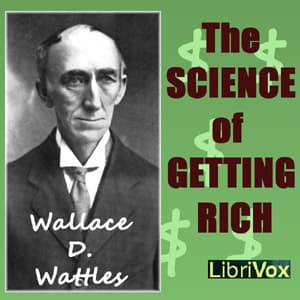

Look, I'll be honest with you. I started this audiobook on a Sunday morning while making dosa batter - the kind of mindless kitchen work where you need something to occupy your brain but nothing too demanding. A two-hour book about getting rich from 1910? Sure. Why not. My mother would be thrilled I'm finally thinking about money instead of fictional murderers.
And here's the thing - I didn't expect to have thoughts about this. But I'm a behavioral psychologist. I can't help it.
The Psychology Behind the Promises
Wallace Wattles wrote this book over a century ago, and it's basically the granddaddy of every manifestation guru on TikTok today. The core premise? There's a "Certain Way" of thinking that attracts wealth, and competition is for suckers - creation is where it's at.
Now, from a psychological standpoint, some of this actually tracks. The research shows that people with an internal locus of control - believing you can influence your outcomes - tend to take more action and, yes, often achieve more. Wattles was onto something there, even if he wrapped it in early 20th century mysticism that sounds a bit... woo-woo to modern ears.
But here's where my academic brain started twitching. He makes claims like thinking in a "Certain Way" will literally rearrange the universe to deliver what you want. That's not psychology. That's magical thinking. And magical thinking, while comforting, can actually be harmful when it leads people to believe failure is simply a matter of not wanting it hard enough. (My therapist would have thoughts about this entire book, honestly.)
The chapters are short and punchy - 17 of them in just over two hours. Wattles doesn't waste your time. I'll give him that.
Diana Majlinger's Narration
Okay, so Diana Majlinger has this calm, measured delivery that works surprisingly well for material like this. It's not exciting. It's not going to keep you awake during a late-night drive. But there's something almost meditative about how she reads - like she's a very patient professor explaining concepts to someone who keeps asking "but why?"
The pacing is deliberate. Some people will find it too slow. I get that. But for a book that's essentially asking you to rewire how you think about money and success? The slower pace gives you room to actually process. I found myself pausing the batter-making to think, "Wait, do I actually believe that?" Which is probably the point.
That said - and this is fair warning - there's no character differentiation because there are no characters. This is straight philosophy delivered in a single voice for two hours. If you need variety in your audiobooks, this might test your patience.
Who This Is Actually For
I found myself asking: why does this book still exist after 100+ years? And I think I know.
It's not because the advice is revolutionary. Honestly, if you've read any self-help in the last decade, you've heard most of this repackaged. "Think positive, take action, don't be jealous of others' success." Basic stuff.
But Wattles writes with this absolute certainty that's almost hypnotic. He doesn't hedge. He doesn't say "this might work for some people." He says: do this, think this way, and you will get rich. Period. For people who are drowning in self-doubt and decision paralysis - and let's be real, that's a lot of us - there's something psychologically soothing about someone just telling you what to do with complete confidence.
Is it scientifically accurate? Meh. Parts of it. Is it potentially helpful as a mindset reset? Possibly. Will it literally make you rich through the power of thought? I mean... no. But you knew that.
This book is for people who want a short, digestible introduction to New Thought philosophy. It's for the curious who want to understand where modern manifestation culture came from. It's for anyone who needs a gentle kick to stop thinking about scarcity and start thinking about creation. It's probably NOT for skeptics who will spend the whole time arguing with a dead man. (I may have done this. Multiple times.)
The Verdict
At just over two hours, this is basically a long podcast episode. Diana Majlinger's narration is clean and professional - nothing fancy, but nothing distracting either. The audio quality is solid.
Would I recommend it? Sample first. Seriously. If Wattles' confident, almost preachy tone clicks with you in the first chapter, you'll probably get something out of this. If you find yourself rolling your eyes, it's not going to get better.
I finished it. I thought about it. I made excellent dosas.
That's probably the best outcome I could've hoped for from a century-old self-help book on a Sunday morning.