
The Listening Scene
Okay, so I started this one on a Monday morning jog through Cambridge. The air was crisp, I was feeling motivated, and I thought: perfect time for a self-help book about embracing your goals. What I didn't expect was to feel like I was being coached by my most enthusiastic friend who'd had three espressos and genuinely believes I can change my life before lunch.
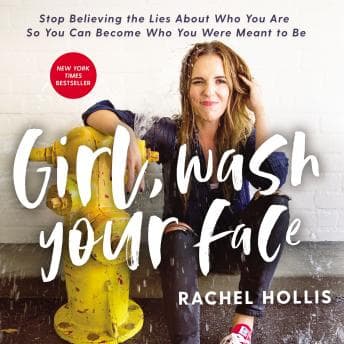
Look, here's the thing about Rachel Hollis narrating her own book: it's intimate in a way that professional narrators can't replicate. She wrote these words, she lived these experiences, and you can hear it. Every inflection carries the weight of someone who actually believes what she's saying. That authenticity? It's both the book's greatest strength and - depending on your tolerance for high-energy motivation - potentially its weakness.
The Psychology of Permission
What makes this book compelling from a behavioral psychology standpoint is that Hollis has identified something real: women are socialized to apologize for their ambitions. The research actually shows that women use apologetic language significantly more than men in professional settings, often undermining their own competence before they've even made their point. Hollis isn't just making this up. She's articulating a pattern that many women recognize in themselves but haven't named.
The protagonist here - and yes, I'm treating Hollis as a character in her own narrative, because that's what memoir-adjacent self-help essentially is - exhibits classic overachiever psychology. She's built a multimillion-dollar media company, she's a working mother of four, and she's telling you that you can do it too. The question I found myself asking: why does this particular messenger connect with so many women?
I think it's because she doesn't pretend to have it figured out. She shares failures. She admits to being messy. She's not the polished guru on the mountaintop; she's the friend who texts you at 2 AM with a breakthrough about her own limiting beliefs. Psychologically, this tracks. We trust people who show vulnerability alongside competence. It's called the pratfall effect, and Hollis - whether intentionally or not - uses it effectively.
The Voice Behind the Advice
Here's where I need to be honest. Rachel's narration is warm, direct, and motivational. She sounds like she genuinely cares about you, the listener, achieving your dreams. Her pacing is good, her voice is clear, and there's a personal touch that makes the audiobook feel like advice from a close friend rather than a lecture.
But.
(And my therapist would have thoughts about this character.)
There are moments when the energy tips from inspiring into overwhelming. Some listeners have described feeling like they're being "yelled at" - in a good way, supposedly, but still. I noticed this particularly during the live conference section at the end, which is frenetic and moves at what I can only describe as manic warp speed. If you're listening while doing chores or commuting, you might need to rewind. Multiple times.
Also, and I say this as someone who appreciates directness: the tone can feel a bit young. I'm in my late thirties, and there were moments when I felt like the target audience was maybe a decade younger. Not a dealbreaker, but worth mentioning if you're sensitive to that sort of thing.
Who This Is Really For
This is a fascinating case study in audience fit. If you're someone who responds well to high-energy motivation, who likes being pushed, who wants someone to tell you to stop making excuses and just do the thing - this audiobook will work for you. Hollis doesn't coddle. She challenges. And for the right listener, that's exactly what they need.
Best for: morning commutes when you need a kick, workout sessions (seriously, the energy matches), or any moment when you're feeling stuck and need someone to remind you that your dreams are valid.
Consider skipping if: you prefer quieter, more contemplative self-help. Or if you find repetition frustrating - Hollis does circle back to similar themes throughout. Or if author-narrated books aren't your thing. Some people just prefer the neutrality of a professional narrator, and that's legitimate.
The Verdict
Look, I'm a behavioral psychologist. I've read the academic literature on goal-setting and motivation. And while Hollis isn't citing peer-reviewed studies, she's articulating principles that are psychologically sound: identify your limiting beliefs, challenge them, take action, build habits. The framework is solid even if the delivery is more cheerleader than scientist.
The author-narrated format adds something here. You're not just reading advice; you're hearing it from someone who built her life around these principles. That matters. It creates accountability, somehow. Like she's watching.
(Don't tell my students I said that.)
I finished this one feeling... energized? Slightly exhausted? Both? It's a lot. But sometimes a lot is what you need. Just maybe not at 1.0x speed. Bump it down to 0.9x if you want to actually absorb the content, or up to 1.25x if you're already caffeinated and just need the momentum.
The audio quality is clean, the production is professional, and Hollis delivers exactly what she promises: a shame-free plan delivered with conviction. Whether that conviction lands for you depends entirely on what kind of motivation you respond to. Sample the first chapter. You'll know within ten minutes if this is your thing.