
The Book That Made Me Pull Over
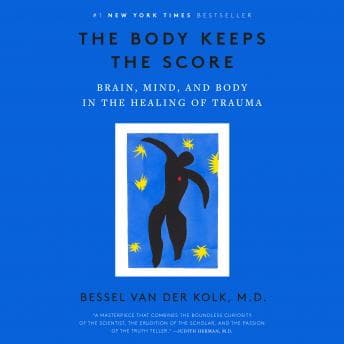
I was driving back from a conference in New Hampshire when I had to pull into a rest stop. Not because I needed coffee—though I always need coffee—but because van der Kolk was describing how traumatized children literally cannot feel their own heartbeats, and I needed a minute. Just... a minute.
This is a fascinating case study in how trauma rewires everything we think we know about the mind-body connection. And I don't use that phrase lightly. (My students will tell you I'm deeply suspicious of anything that sounds too "wellness retreat.") But van der Kolk has spent decades doing the actual research, working with actual patients, and what he presents here isn't woo-woo speculation. It's neuroscience. It's developmental psychology. It's the kind of work that makes you rethink your entire framework.
The research actually shows—and van der Kolk hammers this home repeatedly—that trauma isn't just "in your head." It lives in the body. In frozen muscles. In shallow breathing. In the way survivors literally cannot access certain brain regions when triggered. I found myself asking: why does mainstream psychology still treat talk therapy as the gold standard when the evidence suggests trauma survivors often can't access language during flashbacks? Van der Kolk doesn't just ask this question. He gets angry about it. Productively angry.
Sean Pratt's Measured Approach
Okay, so here's the thing about the narration. Sean Pratt has this very... steady delivery. Clinical, almost. Some listeners have called it "detached," and I get that criticism. When you're describing a Vietnam veteran's dissociative episodes or a child abuse survivor's inability to form attachments, maybe you want more emotional weight in the voice?
But honestly? I think it works. My therapist would have thoughts about this, but I actually appreciated that Pratt didn't try to dramatize the case studies. These are real people. Real suffering. A narrator getting weepy or intense would've felt exploitative. Pratt treats the material with respect, and after sixteen hours, I was grateful for that restraint.
That said—and this is where I have to be honest—the pacing can drag. Van der Kolk is thorough. Sometimes too thorough. There are sections on EMDR and neurofeedback that go deep into the weeds, and Pratt's steady tempo doesn't help you power through. I bumped it up to 1.25x for the more technical chapters and it felt way more manageable.
What Makes This Book Compelling (And Difficult)
The protagonist exhibits classic patterns of—wait, no. There's no protagonist here. That's what makes this book so unusual. Van der Kolk weaves together dozens of case studies, research findings, and his own evolution as a clinician. The closest thing to a through-line is van der Kolk himself, and he's refreshingly willing to admit when he was wrong.
He started his career believing in medication and traditional therapy. Then he watched patients who "should" have improved stay stuck. So he went looking for answers—in yoga studios, in theater programs, in neurofeedback labs. The author understands human nature well enough to know that healing isn't one-size-fits-all. (Don't tell my dissertation committee I'm praising a book that takes theater seriously as therapy. They'd have questions.)
What might bug you: this book is dense. It's not a quick self-help read with five easy steps. Van der Kolk assumes you're willing to sit with complexity, with ambiguity, with the reality that trauma treatment is still evolving. If you want actionable takeaways in the first hour, you'll be frustrated.
Also—fair warning—the case studies are graphic. Childhood abuse. Combat trauma. Sexual violence. Van der Kolk doesn't sensationalize, but he doesn't sanitize either. I had to pause more than once. Not because the narration was overwhelming, but because the content demanded processing time.
Who Should Listen
Look, here's the thing. If you work in mental health, this is basically required reading at this point. But it's not just for professionals. Survivors will find validation here—the sense that finally, someone is explaining what they've always felt in their bodies. Partners and family members of trauma survivors will understand things that never made sense before.
But you need to be in the right headspace. This isn't a bedtime listen. (Trust me. I tried. Bad idea.) It's better for long drives, solo hikes, or dedicated focus time when you can actually absorb what van der Kolk is laying out.
Psychologically, this tracks with everything I've studied about how narrative shapes healing. Van der Kolk argues that trauma survivors often can't construct coherent stories about what happened to them—their memories are fragmented, sensory, disconnected from language. The book itself models what integration looks like: weaving together science, story, and embodied experience into something whole.
The Verdict
This is one of those books that changes how you see things. Not in a dramatic, everything-is-different way. More like... you'll notice things you didn't before. The way someone flinches. The way you hold tension in your shoulders. The way certain memories feel different in your body than others.
Sean Pratt's narration won't blow you away, but it won't get in the way either. The production is clean, the pacing is deliberate (sometimes too deliberate), and at sixteen hours, you're getting a genuinely comprehensive education in trauma psychology.
Is it a perfect audiobook? No. Is it an important one? Absolutely. My mother still wouldn't understand why I need another psychology book. But this one earned its spot.