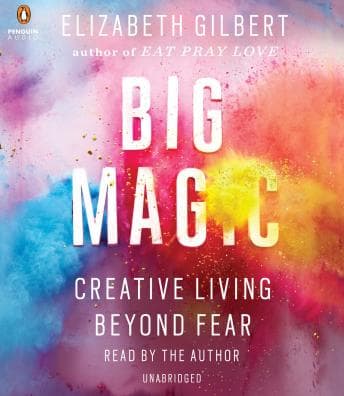

Okay, let's be real for a second. I usually avoid books with "Magic" in the title unless there are spaceships or dragons involved. My bookshelf is 80% O'Reilly technical manuals and 20% hard sci-fi. So, picking up Big Magic was... out of character.
But last week, I hit a massive wall on a side project (a distributed cache visualizer, don't ask, it's nerdy). I was staring at the same block of code for three hours on the Caltrain, completely stuck. I needed a debug tool for my brain, not my code.
So I downloaded this. And honestly? I didn't hate it.
The "Woo-Woo" vs. The Logic
Here's the thing about Elizabeth Gilbert. She talks about creativity like it's a biological entity. Or, in my terms, an independent process running on a server somewhere, just waiting for a client to accept the packet. She has this theory that ideas are disembodied spirits that visit you, and if you don't get to work, they leave and go find someone else.
(This actually explains why three different startups pitch the exact same app idea every Y Combinator batch. Latency issues in the idea-distribution network, obviously.)
Is it a bit spiritual? Yeah. Did I roll my eyes a few times? Definitely. But underneath the mystical language, the logic is surprisingly solid. It’s basically a refactoring of how we handle fear. She argues that you shouldn't try to kill your fear (because that's a system critical process for survival), but you shouldn't let it drive the car.
It’s practical advice wrapped in a bohemian scarf. And for a burnt-out engineer trying to remember why she likes building things, it hit the spot.
The Author-Narrator Factor
Usually, I have a hard rule: Authors shouldn't narrate their own books. It’s usually a disaster. They mumble, they rush, they don't know how to use a mic.
But Gilbert is the exception.
She sounds... warm. Relaxed. It doesn't feel like she's reading a script; it feels like she's sitting next to you on the train, holding a glass of wine (or a very expensive latte), telling you to stop being such a perfectionist. Her pacing is deliberate but not slow. She laughs at her own jokes, but it feels genuine, not staged.
She has this "permission slip" vibe. Like, she's literally giving you permission to make bad art. To write bad code. To build a feature that no one uses. Because the point isn't the IPO; the point is the build.
The ROI (Return on Inspiration)
That said, this book isn't perfect. (Perfect is boring, right? That's the whole point).
It gets repetitive. There were moments in the middle—around hour 3—where I felt like we were circling the same variable without updating the state. She makes a point, tells a story, then makes the same point again with a different story.
If this were a pull request, I’d leave a comment saying: "Duplicate logic detected, please consolidate."
And at 1.0x speed? No way. It's too slow. I cranked this up to 1.5x, and it flowed way better. At that speed, the repetition feels less like padding and more like reinforcement.
Final Stack Trace
I finished this in two round-trip commutes. By the time I got off at Mountain View on Thursday, I actually opened my laptop and wrote some terrible, messy code. And it felt great.
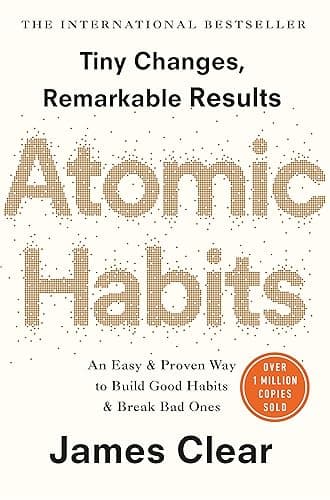
If you're looking for a step-by-step manual on how to be creative, skip this. Go read Atomic Habits or something. But if you're stuck in analysis paralysis, or you're afraid to ship because it's not "perfect" yet, give this a listen.
It’s a 5-hour pep talk that might just get you to hit 'deploy'.